Toyama Shimbun Takaoka Kaikan
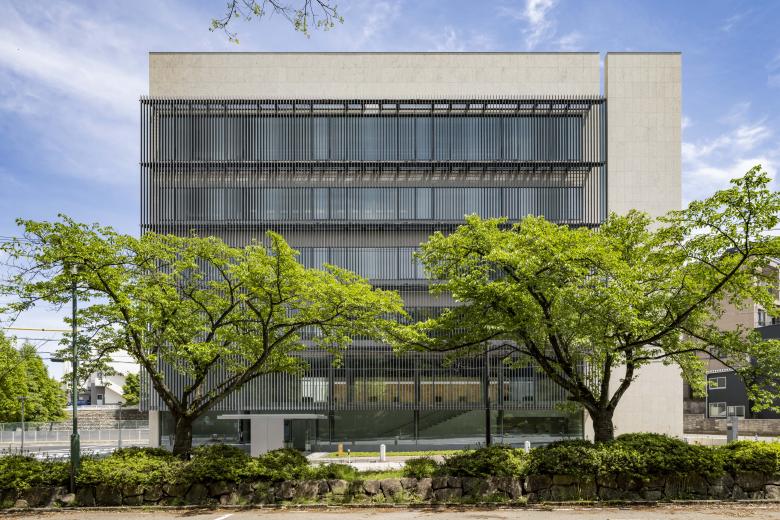
To mark the 130th anniversary of the Hokkoku Shimbun and the 100th anniversary of the Toyama Shimbun, the Toyama Shimbun Takaoka Kaikan was newly constructed in Takaoka City, the birthplace of the Toyama Shimbun. This building combines the functions of a newspaper office and a cultural centre.
The Hokkoku Shimbun was first published in 1893, while the Toyama Shimbun began as the “Hokkoku Shimbun Chūetsu Supplement” on 1st May 1923. It was renamed the “Etchū Shimbun” the following year. After a wartime suspension, it resumed publication as the “Toyama Shimbun” in 1946, continuing to this day.
The Toyama Shimbun Takaoka Cultural Centre is one of the largest cultural centres in Toyama Prefecture, operating classrooms and studios at 20 locations across the prefecture. Currently, approximately 1,000 people study in around 190 courses covering music, sports, dance, yoga, arts and crafts, performing arts, literature, and business.
The Toyama Shimbun Takaoka Kaikan is situated on the east side of "Takaoka Kojo Park", in the central urban area of Takaoka City, Toyama Prefecture, across a prefectural road. Takaoka Castle Park, the site of Takaoka Castle built by Maeda Toshinaga, is a moated park rich in water. It is renowned as a prime cherry blossom viewing spot in spring, offers refreshing, lush greenery in summer, displays vibrant autumn foliage, and presents a tranquil, snow-covered scene in winter, showcasing vivid natural beauty throughout the seasons. In the early Meiji period, the land was sold off to private interests and faced the threat of deforestation. However, following petitions from Takaoka townspeople, it was preserved and opened to the public as a park. The park features an Art Forest, a museum, and a zoo, making it a beloved civic retreat where people can enjoy abundant nature. Surrounding the park are the Civic Gymnasium, the City Art Museum, and the Takaoka Culture Hall, creating an area steeped in history and culture.
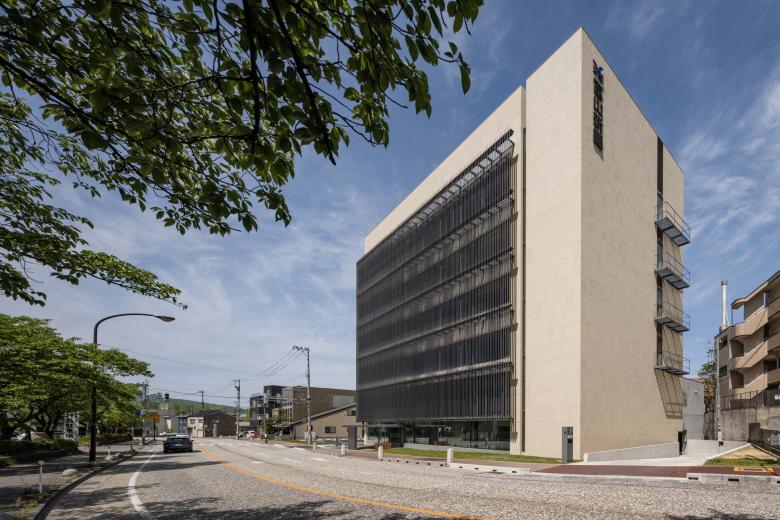
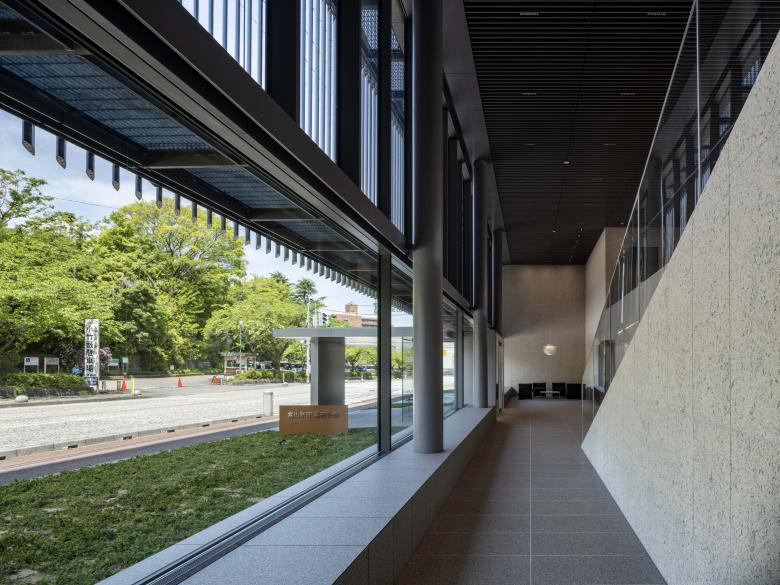
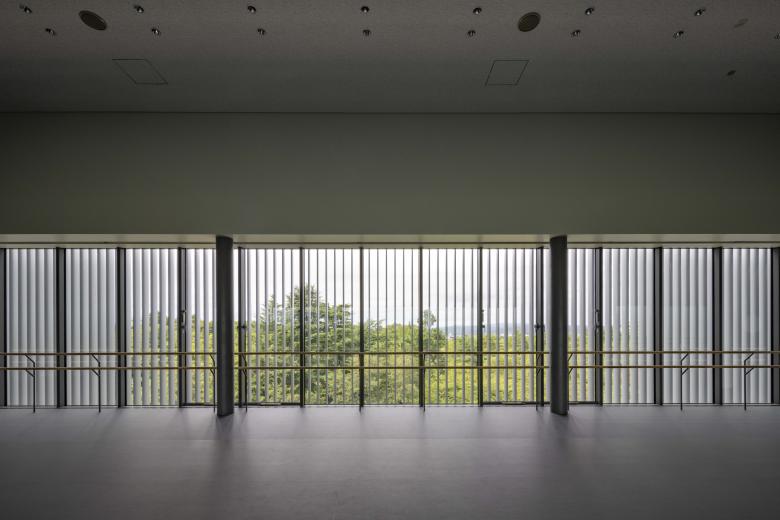
In designing the Toyama Shimbun Takaoka Kaikan, the aim was to create a beautiful landscape harmonising with the rich scenery of water and greenery in the expansive"Takaoka Kojo Park" before it. Furthermore, by incorporating the seasonal scenery into the building's interior, the plan sought to make the activities of the newspaper company and cultural centre, as seen through the building, feel appealing to citizens.
Initially, the site was flanked to the south by the adjacent former Takaoka Kaikan building. The design progressed with the intention of preserving the familiar atmosphere of the landscape cherished by the townspeople, including aligning the heights of the new and old structures. Subsequently, the old building ceased its function to make way for car park development. However, its presence lives on in memory and is carried forward into the new Takaoka Kaikan. Its exterior was designed as a unique abstract expression combining transparency and a sense of depth.
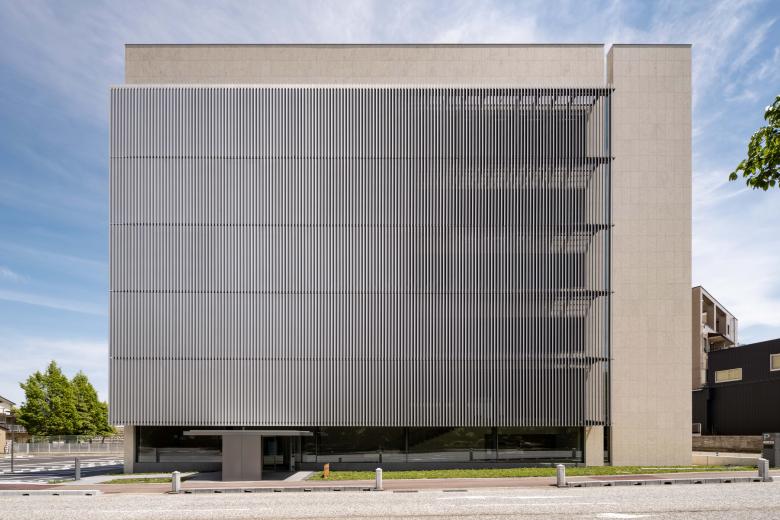
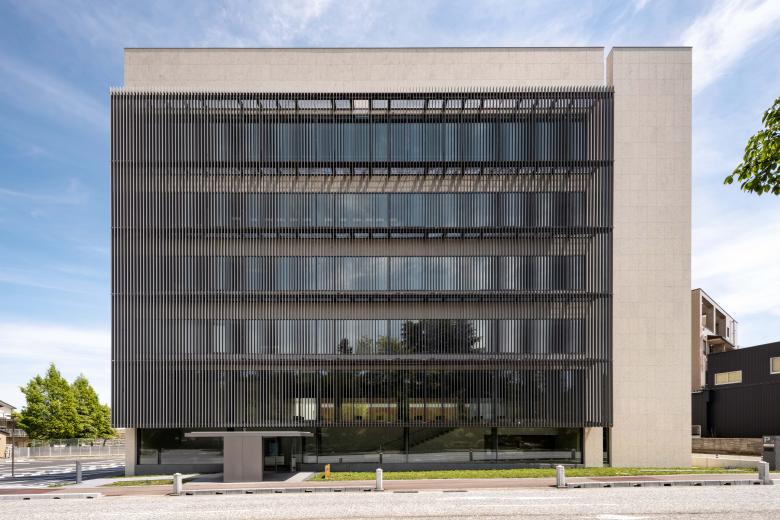
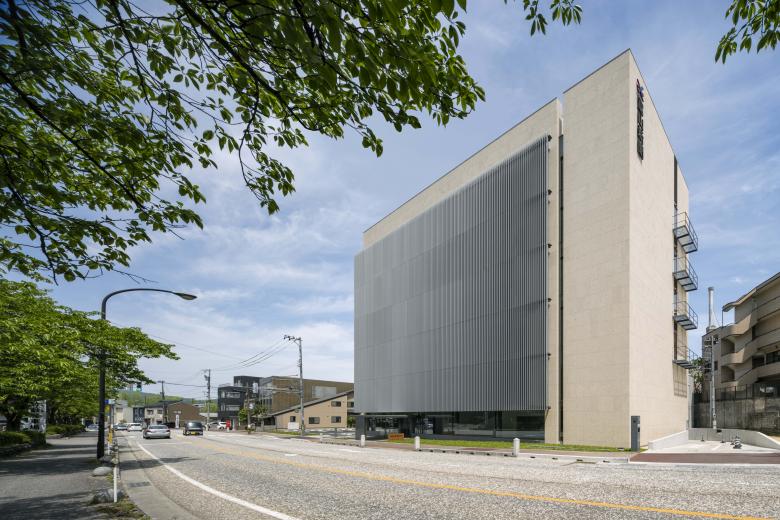
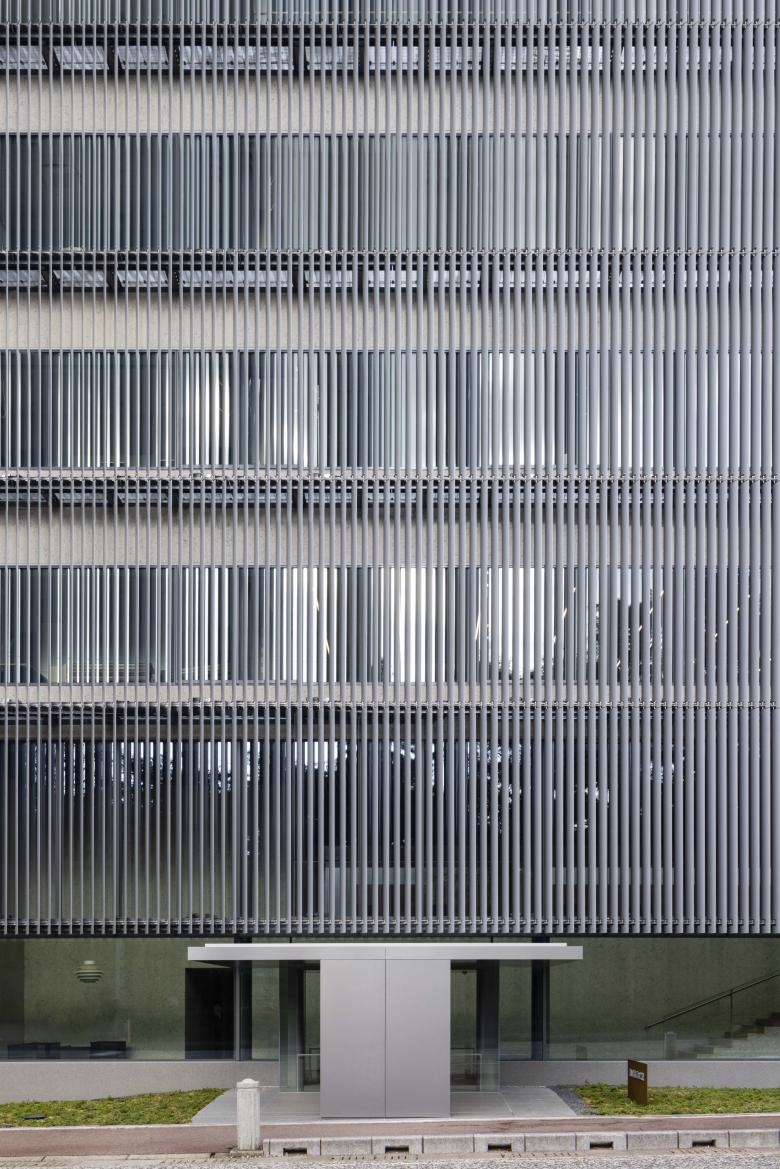
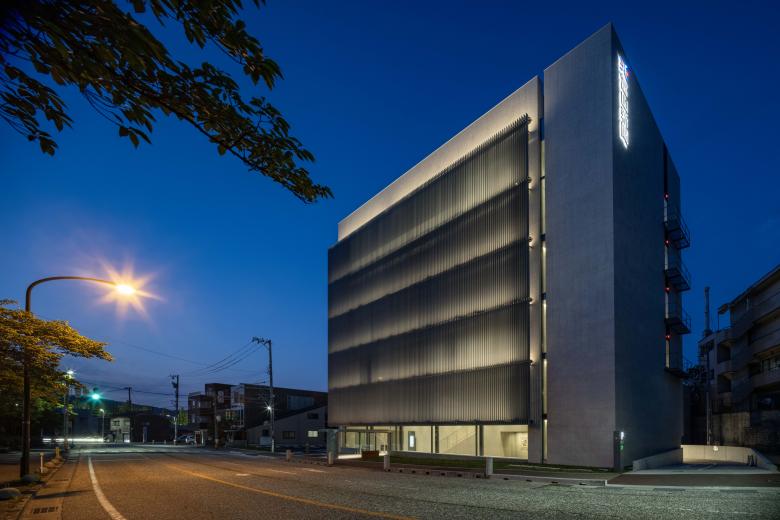
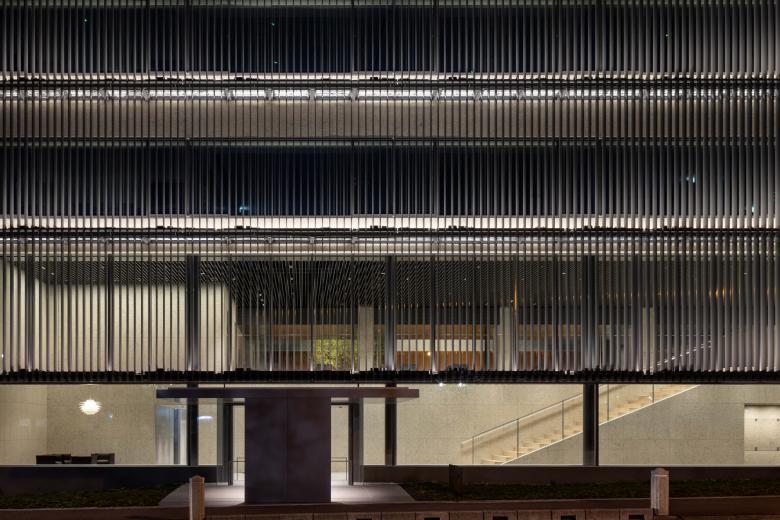
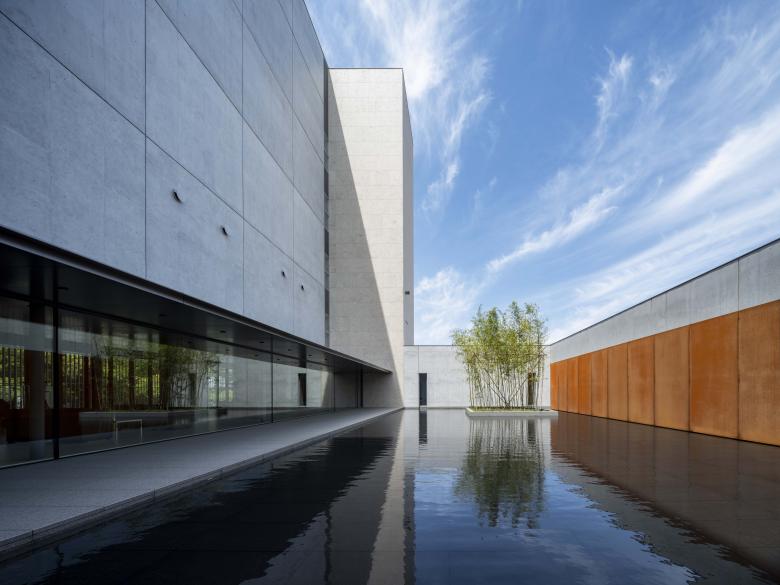
The façade is composed of walls clad in stone of a warm, approachable colour palette and movable aluminium louvers evoking Takaoka's traditional Senbon-koushi latticework streetscape, harmonising with the rich, seasonal transformations of "Takaoka Kojo Park".
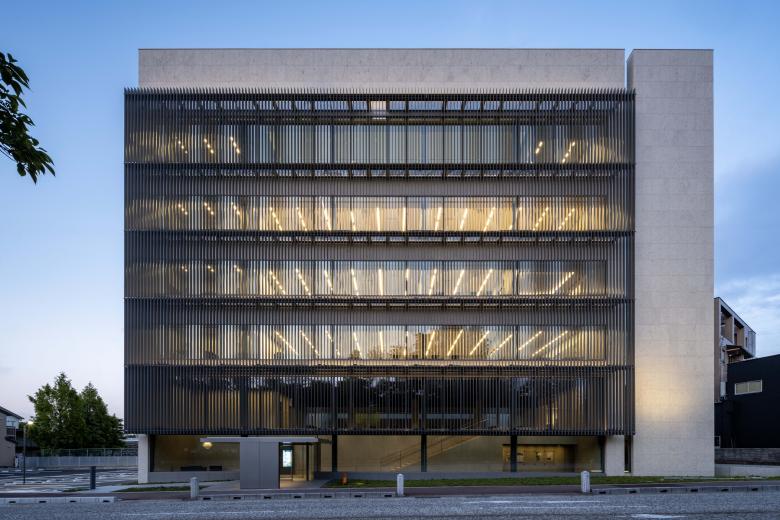
Vertical louvers with a streamlined cross-section, installed on the building's western façade, serve both as an expressive element and as a device to block the intense western sun while introducing soft, indirect light into the interior. The orientation of the louvers is set to change angle in accordance with the sun's movement. At night, the warm light filtering through the lattice gently illuminates the streetscape, creating a subtly changing appearance depending on the time and weather.
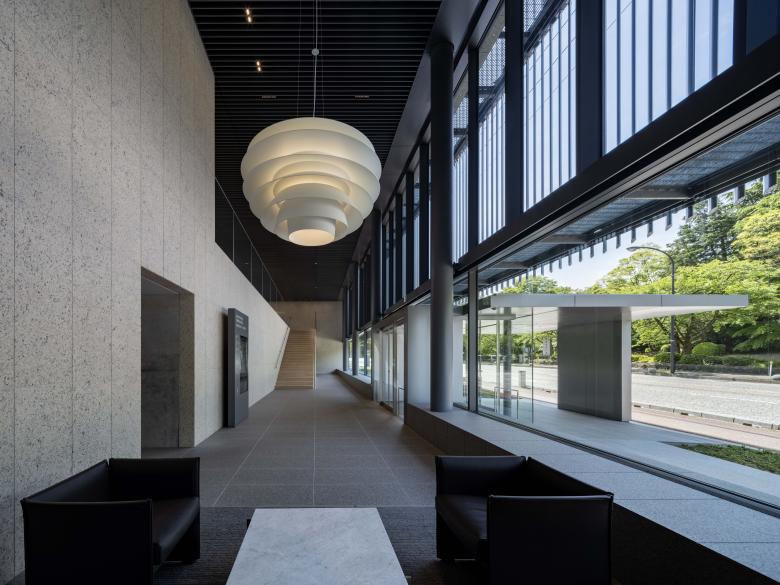
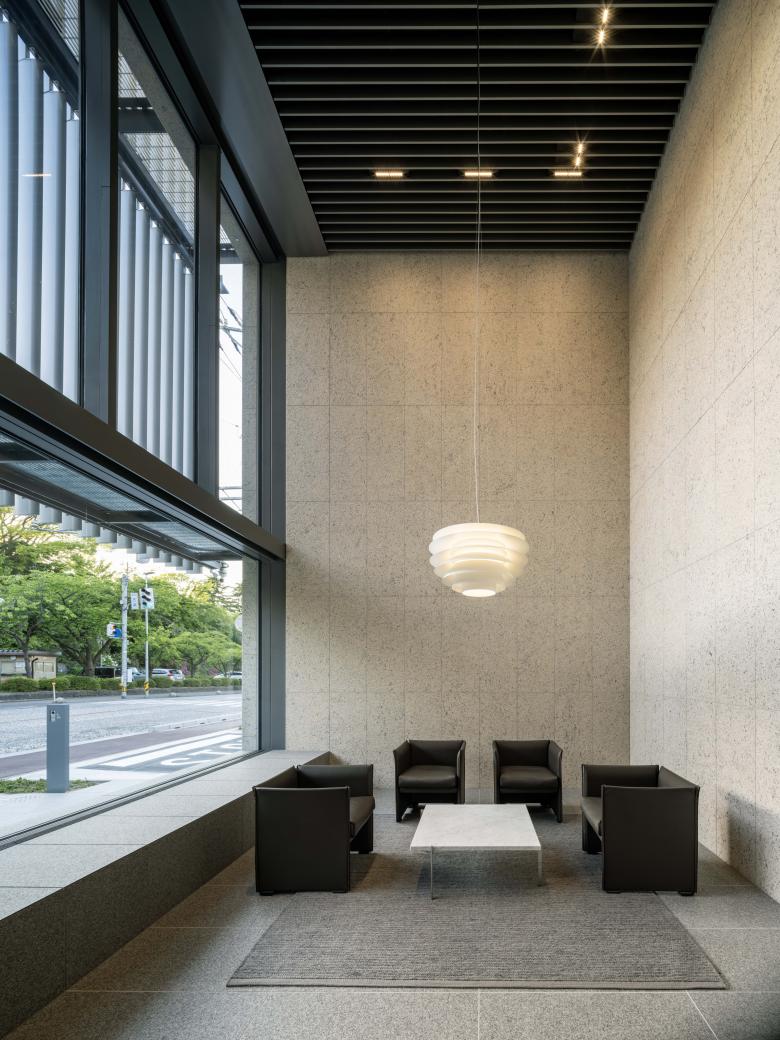
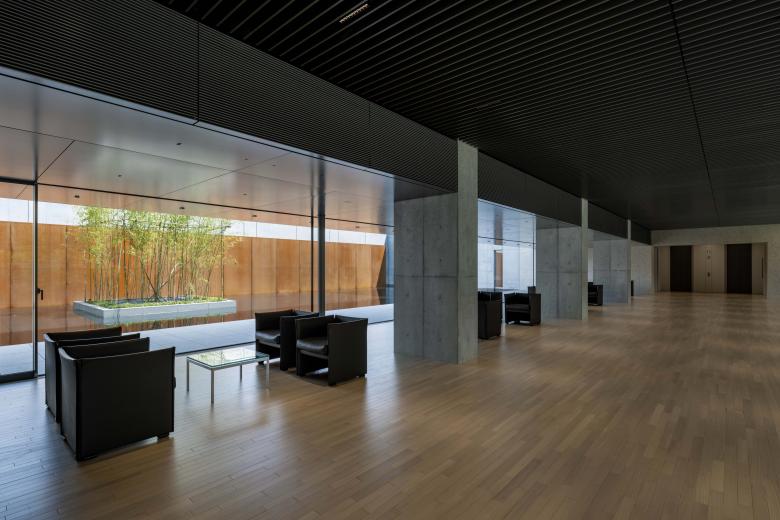
The internal layout is designed to contribute to the street's vibrancy. To allow the appeal of activities within the facility to be perceived from the street and the Old Castle Park side, the corridor, lobby, lounge, and cultural centre functions are positioned facing the western road towards "Takaoka Kojo Park".
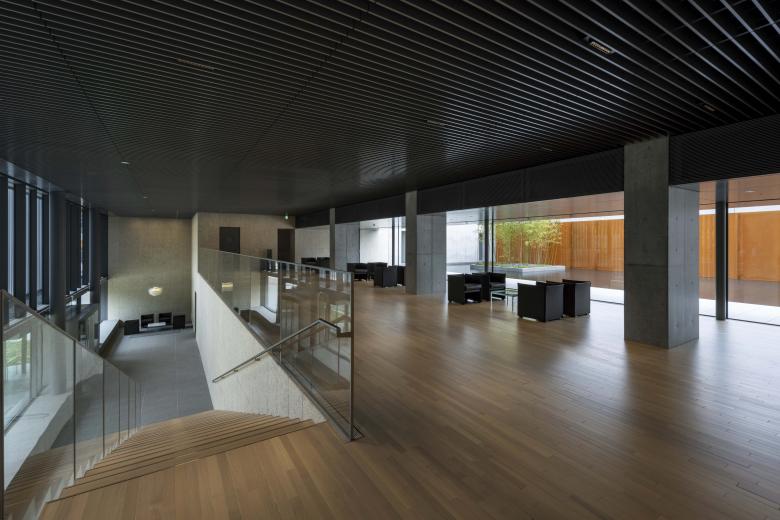
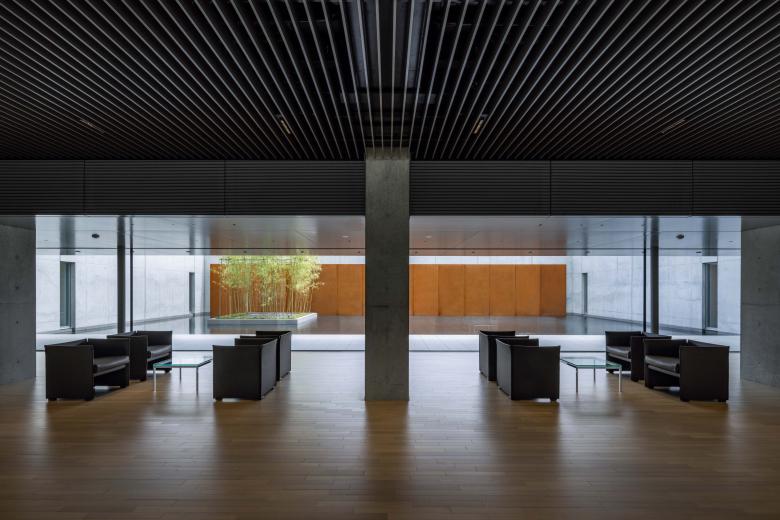
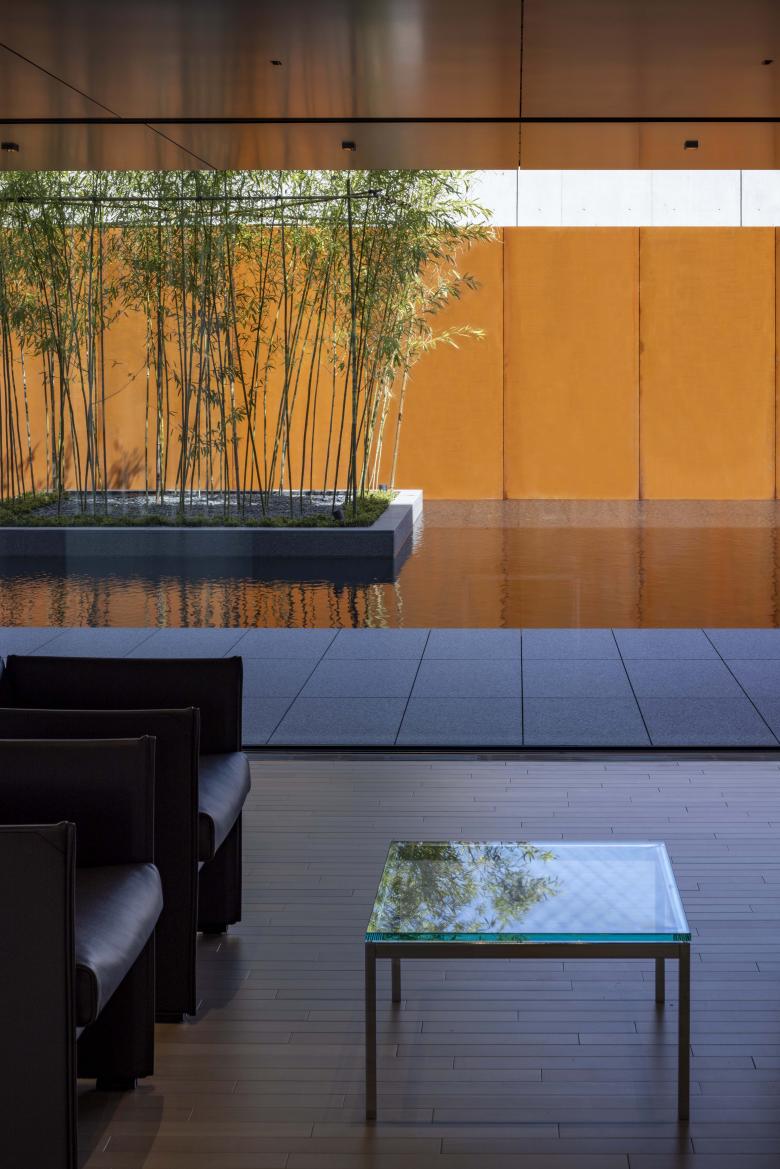
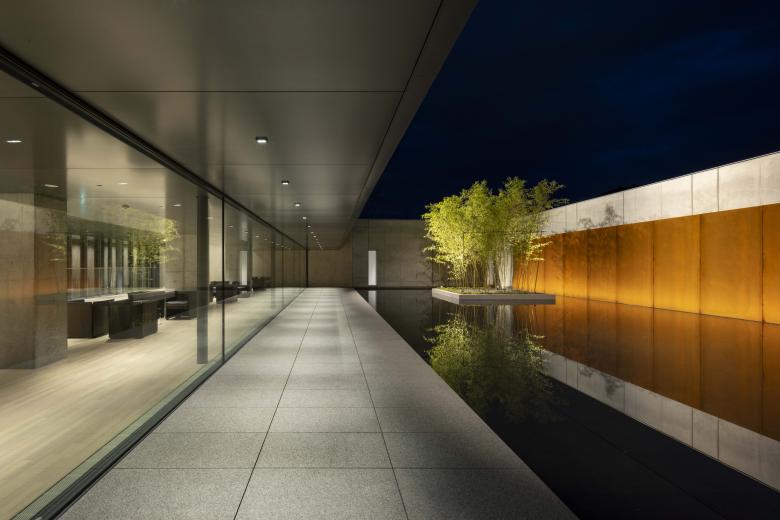
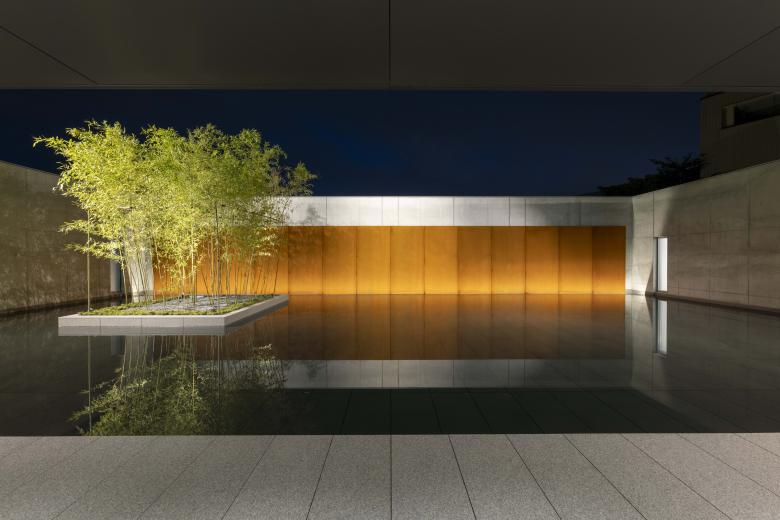
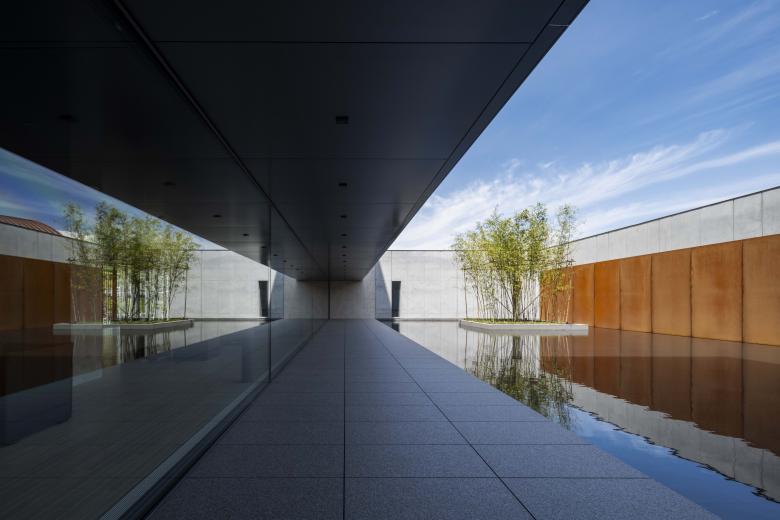
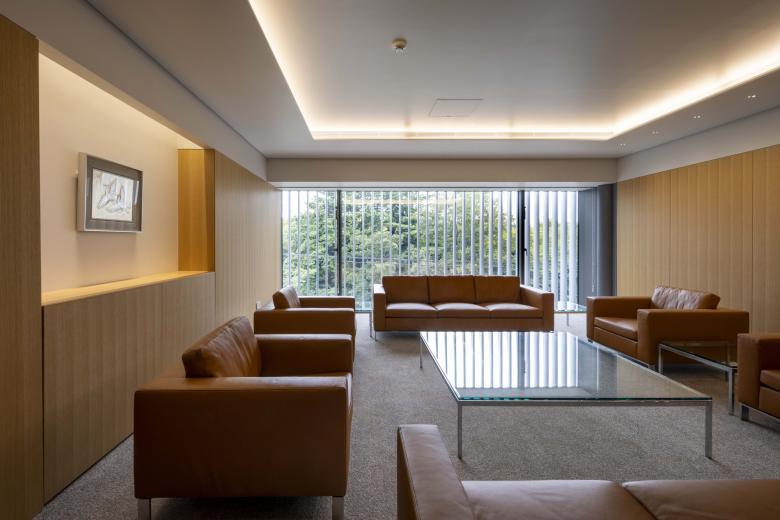
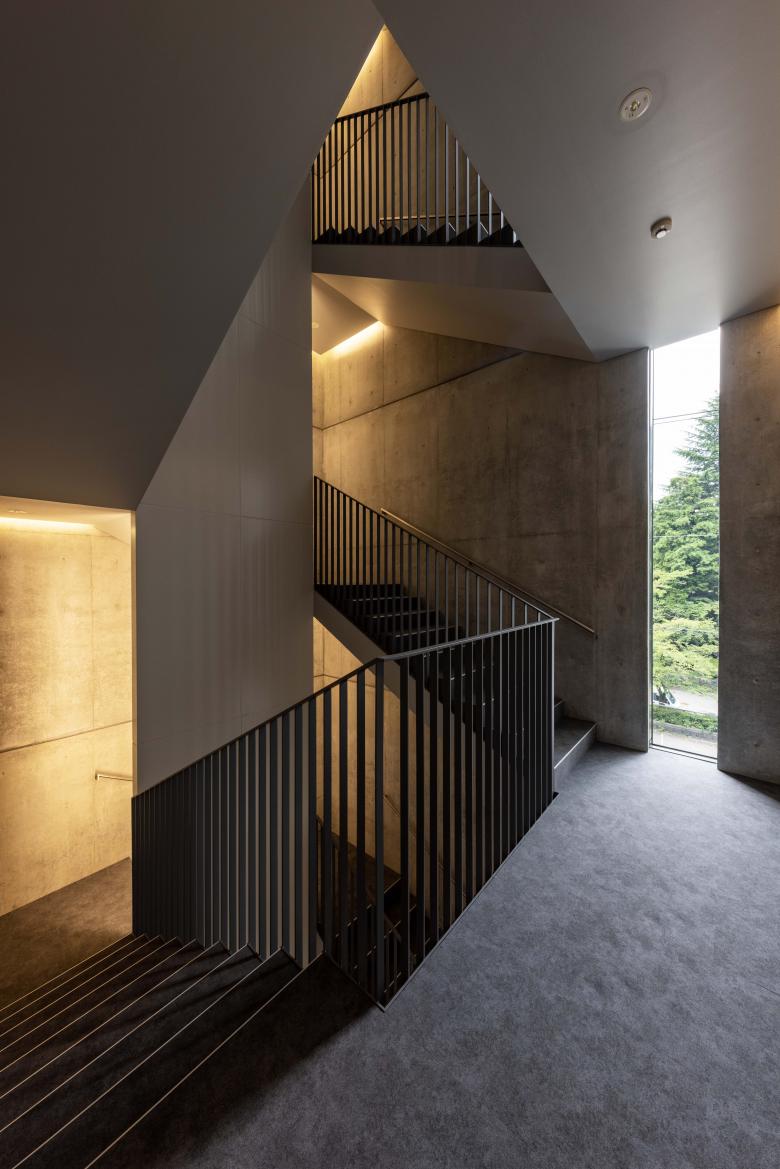
Entering the corridor from the approach, a staircase leads to the second floor. Ascending the stairs, the second-floor lounge offers a panoramic view of "Takaoka Kojo Park" through the aluminium louvers, framed by the corridor's atrium. Simultaneously, shifting one's gaze eastward reveals the continuous expanse extending towards the water garden and the eastern sky. This is a place where one can spend tranquil moments contemplating the water garden's seasonal scenery: the shimmering ripples against a backdrop of rusted iron, bamboo fronds swaying in the breeze, or its winter snow-covered beauty.
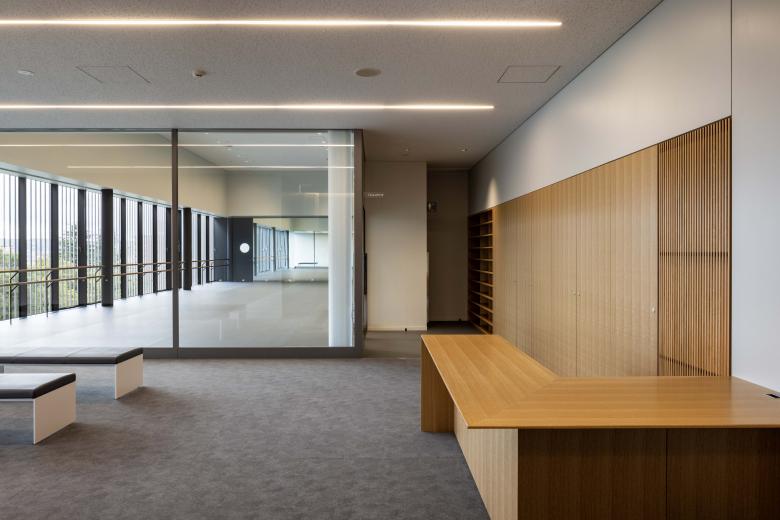
The second-floor lounge is also envisaged as a venue for diverse events organised by the newspaper company, as well as for cultural centre programmes and presentations. Tea ceremonies and ikebana flower displays have already been held here.
To the east of the water garden lie the newspaper company's offices. A gallery has been established within the corridor connecting the lounge and offices, intended to display the newspaper company's collection of art and crafts, as well as works by cultural centre students, fostering an exchange of culture and information.
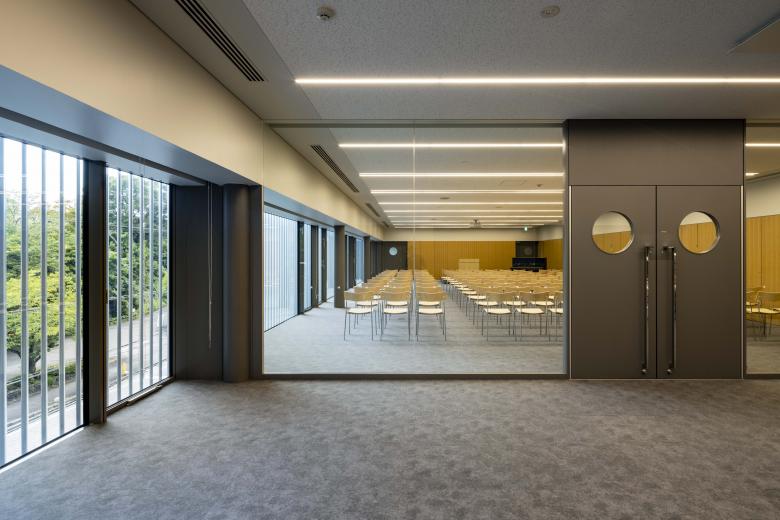
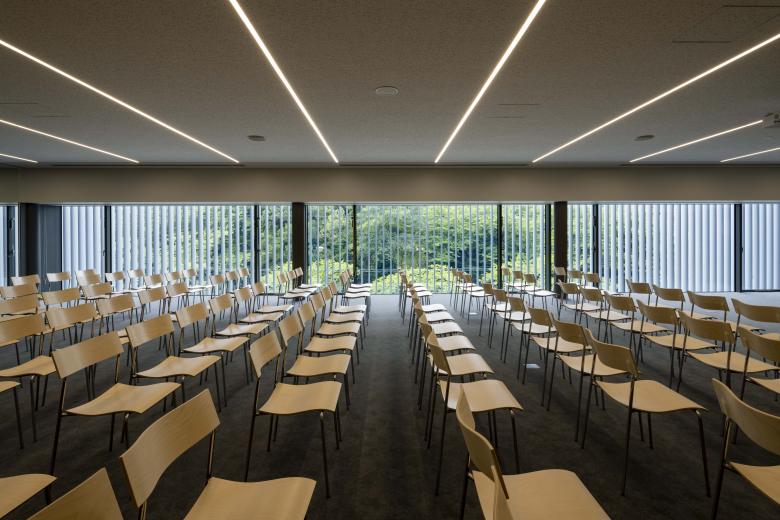
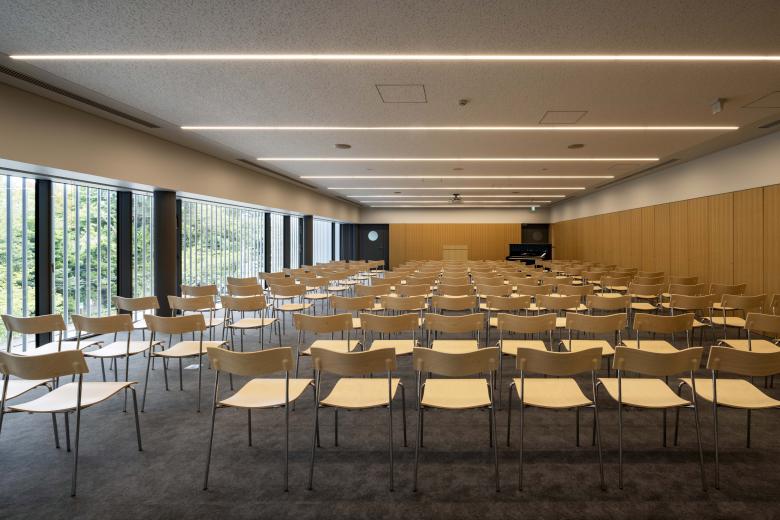
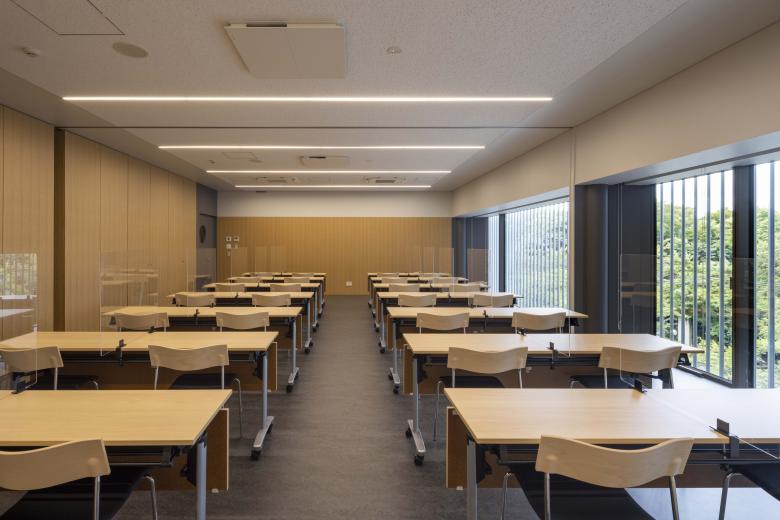
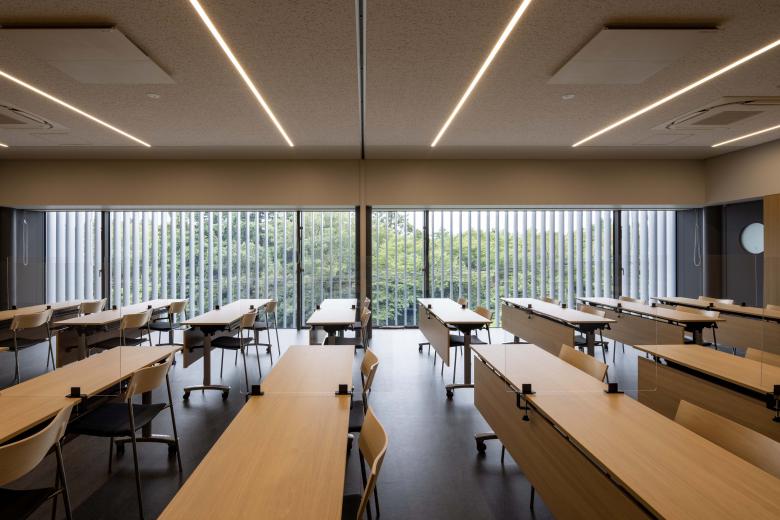
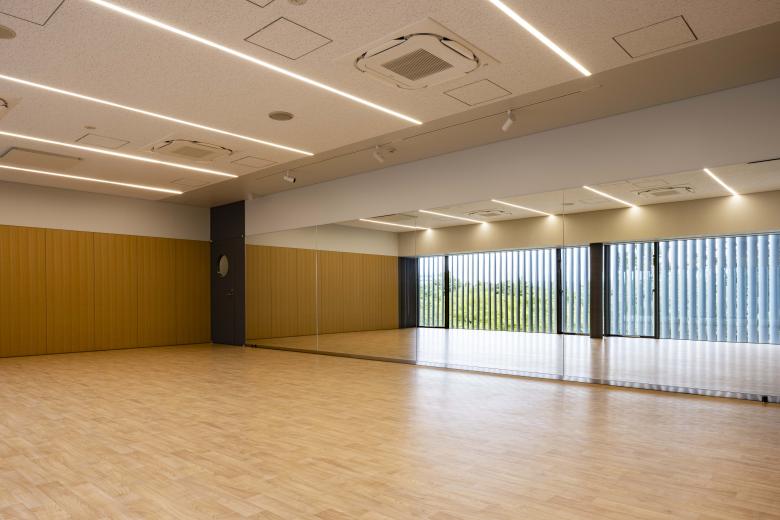
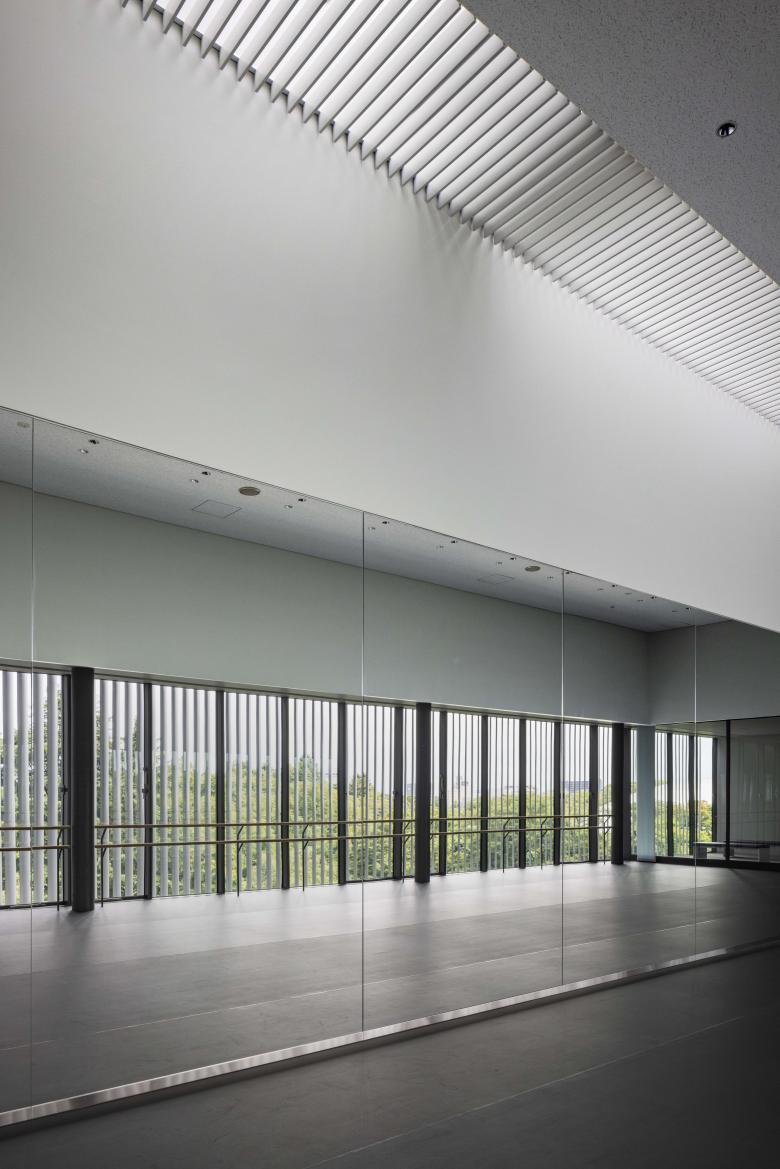
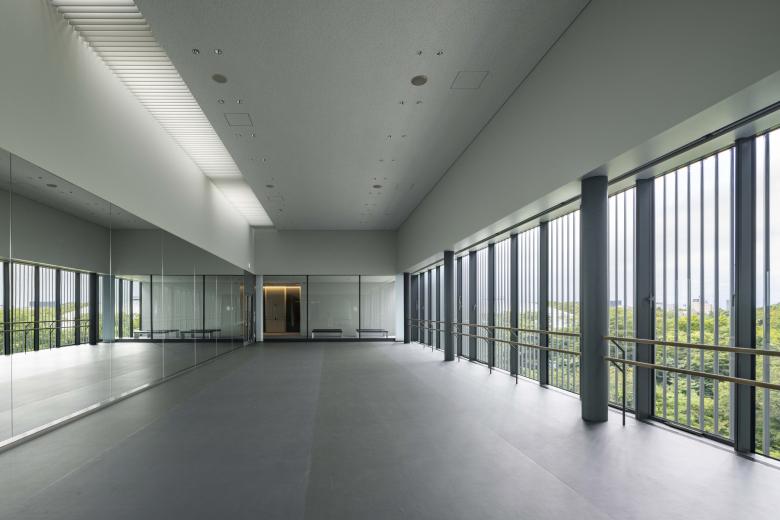
The third floor features a hall suitable for seminars and lectures organised by the newspaper company, which can also function as a classroom for the cultural centre. The fourth and fifth floors, offering panoramic views over "Takaoka Kojo Park", house a dance studio, yoga studio, multi-purpose classroom, and reception room. The sixth floor features a ballet studio with distant city views through the treetops of "Takaoka Kojo Park". The first floor contains a soundproofed music studio.
It is hoped this facility, designed to pass on information and culture to the future, will be cherished and used for many years to come.
Building Specifications
Primary Use: Cultural School, Office for Newspaper company
Site Area: 2,580.80m²
Building Footprint: 1,237.88m²
Total Floor Area: 3,611.88m²
Number of Storeys: 6 above ground
Structure: Reinforced Concrete
Toyama Shimbun Takaoka Kaikan was designed by Motoyasu Muramatsu, who was commissioned by Taniguchi Architects & Associates (Yoshio Taniguchi).

- Año
- 2023
- Project Status
- Construido
- Cliente
- 北國新聞社
- Equipo
- Taniguchi and associates