Manresa Island
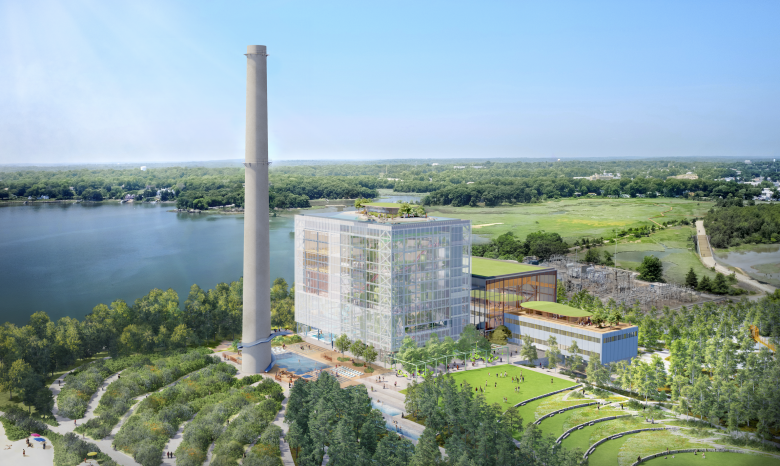
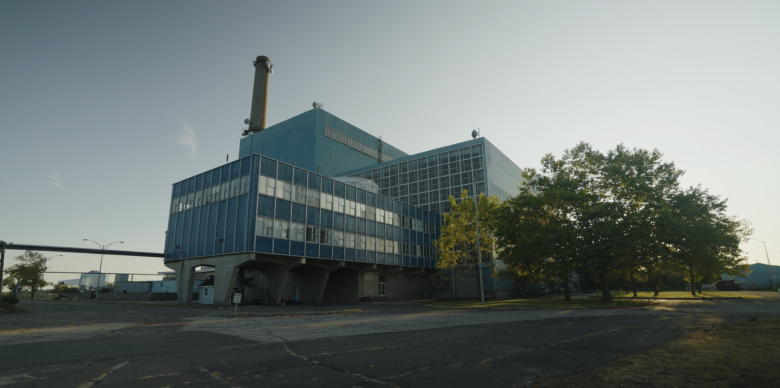
Manresa Island is situated on the site of a decommissioned power plant in Norwalk, Connecticut. The industrial peninsula, surrounded by water on three sides, will be transformed into a 125-acre publicly accessible park and destination with diverse year-round public programs, unlocking 1.75 miles of waterfront access for the first time in nearly 75 years. BIG was commissioned to preserve and adapt the plant’s main structures: the 22,000-sq-ft boiler building; the 22,000-sq-ft turbine hall; the 8,200-sq-ft office building; and the 350-ft-tall smokestack. Through adaptive reuse, these will be reimagined into a network of event spaces, educational and research facilities, and areas for play.
Once home to the Manresa Institute, a retreat and recreation destination in the late 19th and early 20th centuries, the site was converted into a coal-fired power plant in the 1950s. After Hurricane Sandy damaged the plant and it was decommissioned in 2013, the land has seen a resurgence in its natural environment, with a birch forest growing on the disposed coal ash and increased populations of ospreys nesting throughout the area.
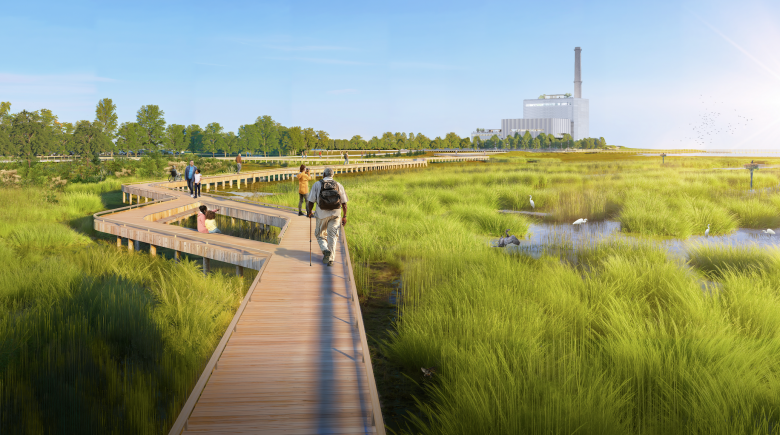
Immersing visitors in the site’s ecological richness, Manresa Island’s publicly accessible park, designed by SCAPE, will feature new waterfront walking paths, inviting exploration and connection with nature. The park will include an expansive green lawn and meadow, a public beach with sweeping views of the Long Island Sound and New York City, pedestrian bridges that provide opportunities to observe wildlife, living shorelines, and wetland restoration, ensuring a resilient public space that celebrates and protects the island’s biodiversity. Rooted in Manresa Island’s aquatic theme, visitors can also enjoy outdoor thermal pools, a rejuvenated pier, and a boat launch.
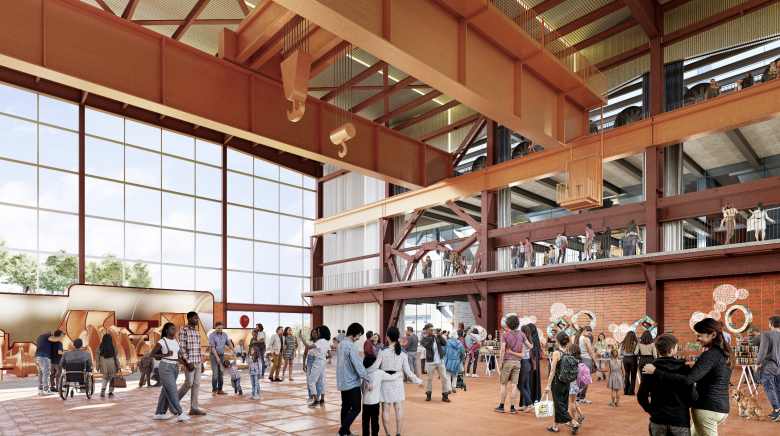
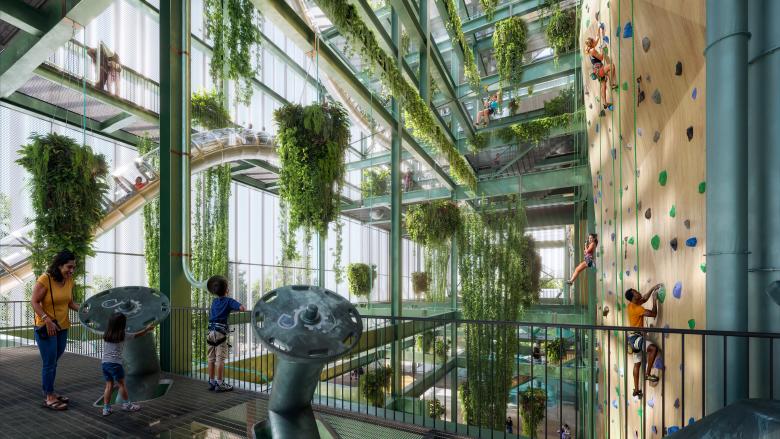
The eight-story boiler building will focus on recreation, including multiple play areas and food and beverage options. The turbine hall will be converted into a multi-purpose event space and speakeasy, while the adjacent office building will provide opportunities for marine and ecological learning as a laboratory with classrooms and research spaces. The design will preserve key aspects of the existing power plant, including the structural framework, smokestack, and administrative space.
Manresa Island will become a revitalized ecological habitat and destination with diverse year-round public programs, including water-based activities like swimming and kayaking, children’s play areas, and research partnerships with local universities. The project is slated to open in phases, with most of the park targeted for completion by 2030.
About BIG - Bjarke Ingels Group
BIG - Bjarke Ingels Group is a Copenhagen, New York, London, Barcelona, Shanghai, Los Angeles, Zurich, Bhutan, and Oslo-based group of architects, designers, urbanists, landscape professionals, interior and product designers, researchers, and inventors. Led by Bjarke Ingels, the studio is currently involved in projects throughout Europe, the Americas, Asia, Oceania, and the Middle East. BIG’s architecture emerges out of a careful analysis of how contemporary life constantly evolves and changes. The firm believes that by hitting the fertile overlap between pragmatic and utopia, architects can find the freedom to change the surface of our planet to better fit contemporary life forms.
About SCAPE
SCAPE is a collaborative landscape architecture and urban design practice that shapes beloved places that are socially vibrant and ecologically restorative. Every scale is essential. From 100-mile river corridors to rooftop microplazas, their work combines design excellence and a deep knowledge of ecology to regenerate, connect, and transform the built environment. Today, the firm is led by five partners: Kate Orff, Gena Wirth, John Donnelly, Alexis Landes, and Pippa Brashear. In 2017, Kate became the first landscape architect to receive the MacArthur “Genius” Fellowship.
- 年
- 2030
- Project Status
- デザイン案