Cloud 11
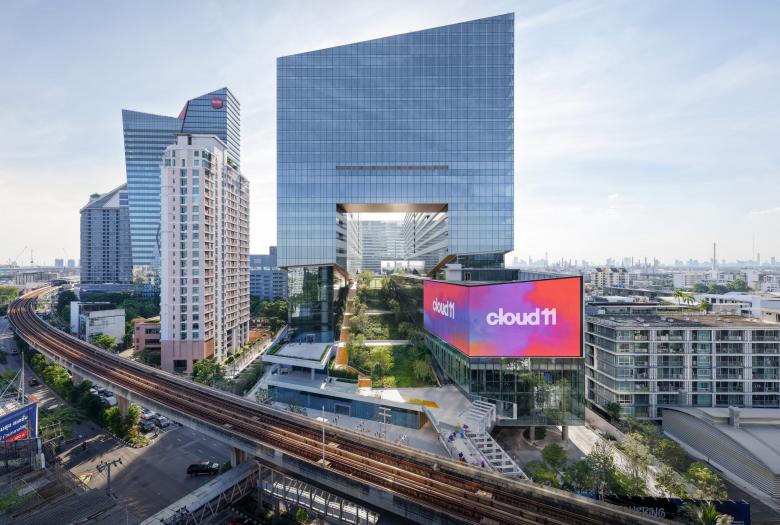
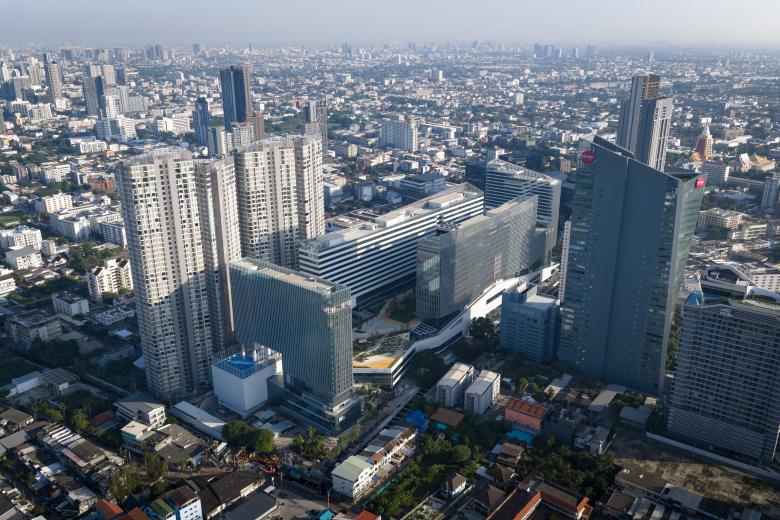
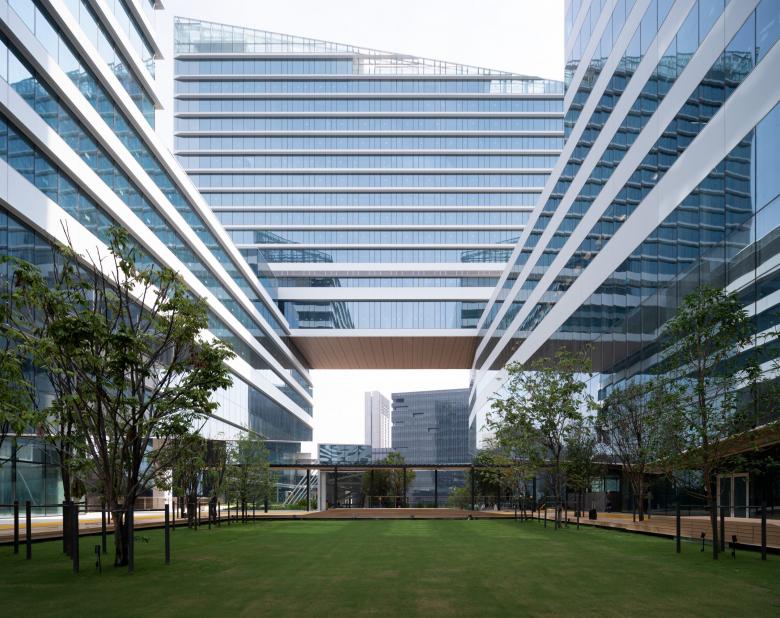
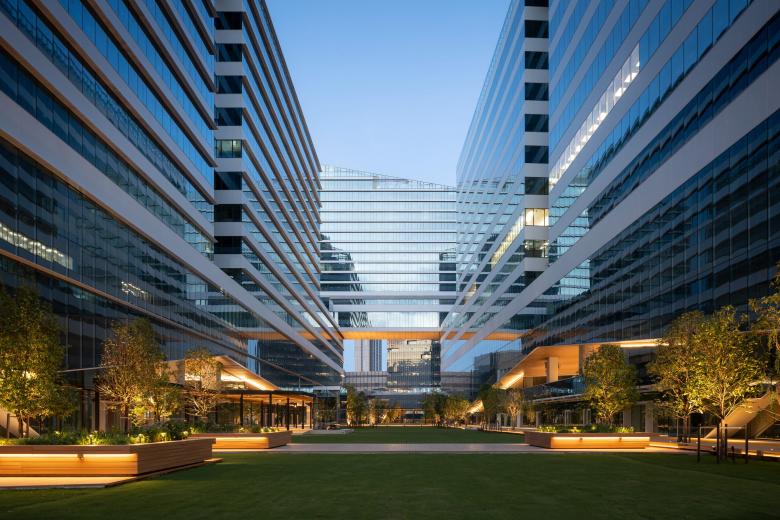
Snøhetta, in collaboration with A49 Architects, has unveiled its most extensive urban regeneration project in Asia for Magnolia Quality Development Corporation (MQDC). Located in the South Sukhumvit — one of Bangkok’s most vibrant cultural and innovation hubs — Cloud 11 is a mixed-use development defined by a central courtyard that serves as both ecological infrastructure and cultural park. The design harnesses the power of landscape to create an urban oasis that champions environmental resilience and community wellbeing.
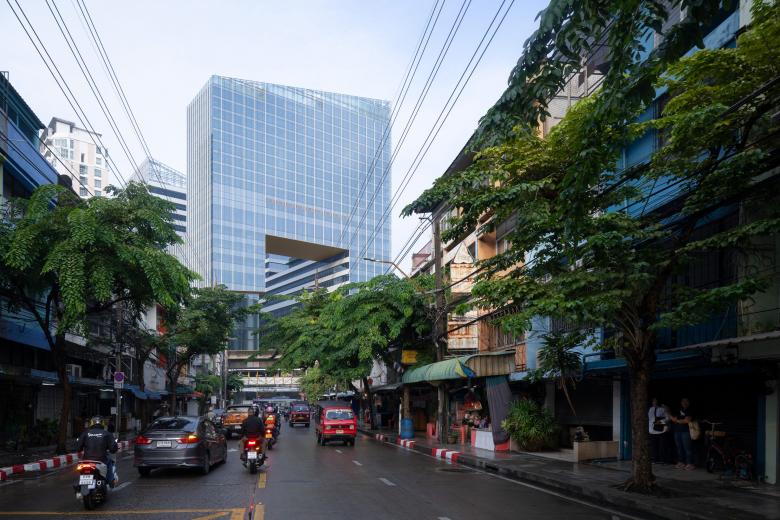
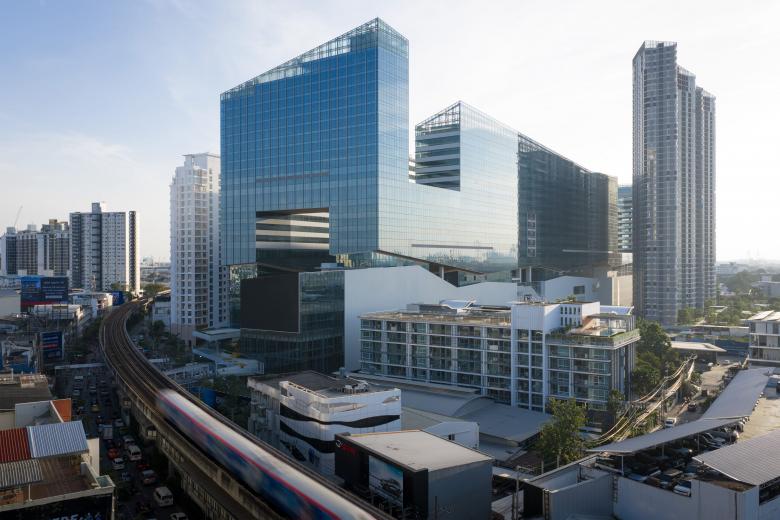
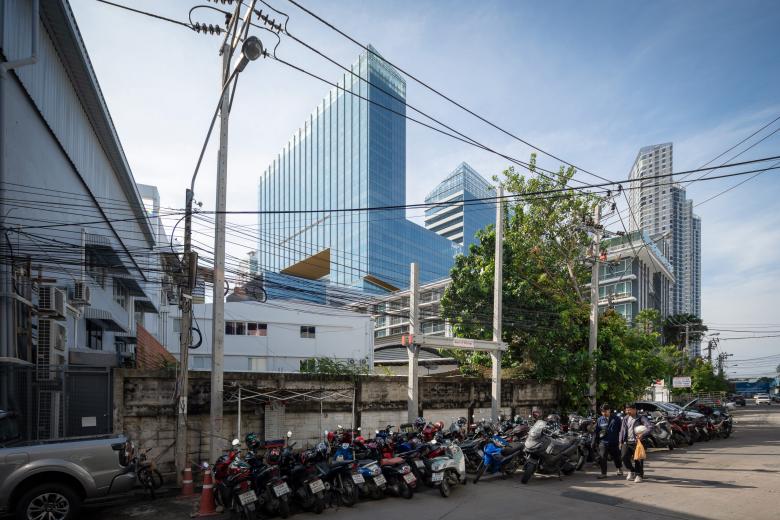
Rooted in its surrounding context, the project is inspired by the layered conditions of Bangkok’s shophouse streets, elevated skytrain lines, and emerging high-rise towers. By sculpting the architecture from the space between these layers, Cloud 11 forms a new “in-between” realm. The result is a generous public landscape that bridges scales, reconnecting the neighborhoods, offering a vibrant civic space for all.
Bangkok faces significant urban challenges, including rising heat, air pollution, recurrent flooding, and one of the lowest public green space ratios in Asia – less than 7 m² per resident, compared to a regional average of 39 m². Snøhetta’s solution to these issues is a sustainable, landscape-based approach with a horizontal landmark and a raised landscape to prioritize openness, accessibility, adaptability, and community.
Invented as a new platform for innovation, creativity, and sustainable urban living with easy access to public transit, Cloud 11 will bring together creative companies, artists, and entrepreneurs, while offering residents and visitors 24-hour access to cultural venues, retail, hotels, and generous green spaces.
Landscape-Driven Response to Urban Challenges
Cloud 11 responds to Bangkok’s pressing urban challenges, aligning with the Green Bangkok 2030 and Enter Bangkok 2050 initiatives that reflect Thailand’s commitments under the UN Framework Convention on Climate Change (UNFCCC) and the Paris Agreement. As a development supporting these national and global goals, the design employs a sustainable, landscape-based approach to offset the environmental impact of large-scale urban developments.
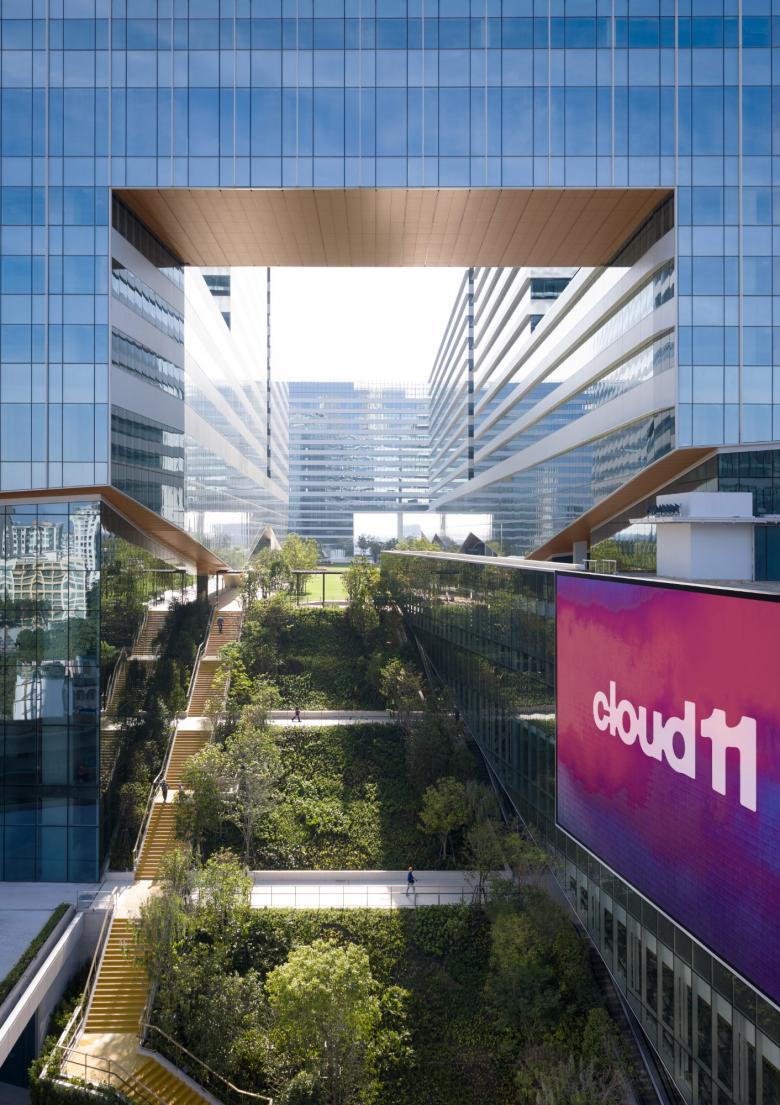
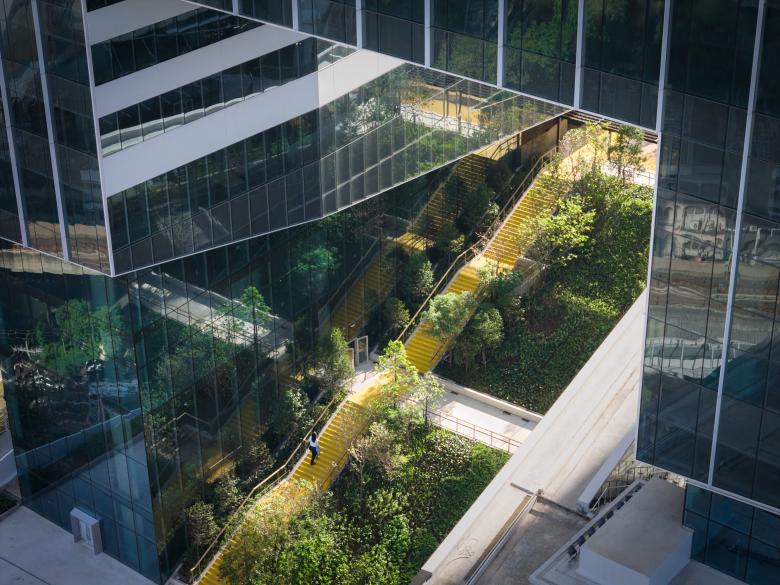
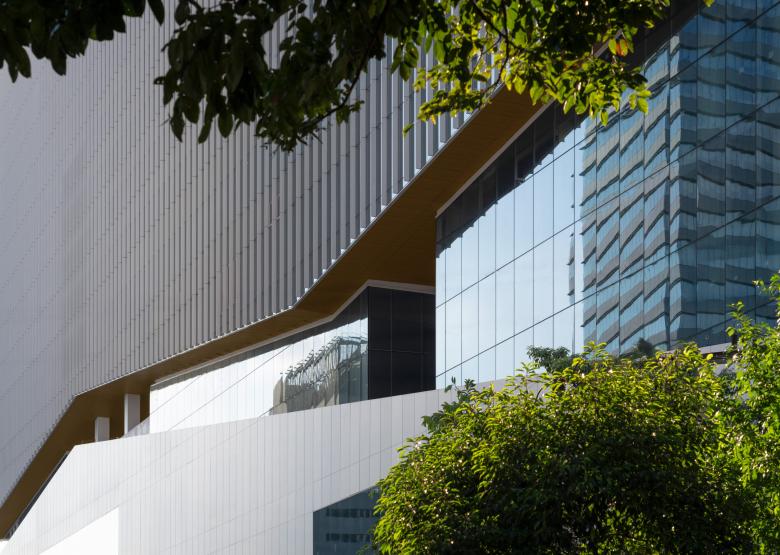
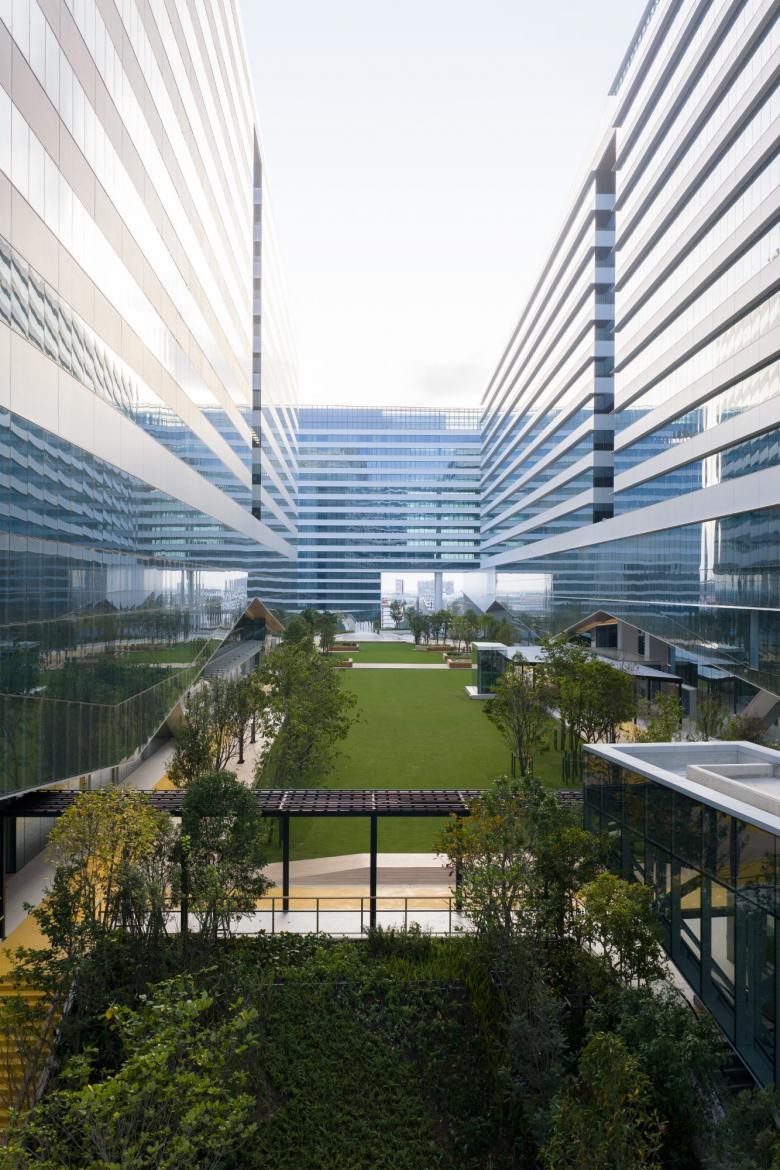
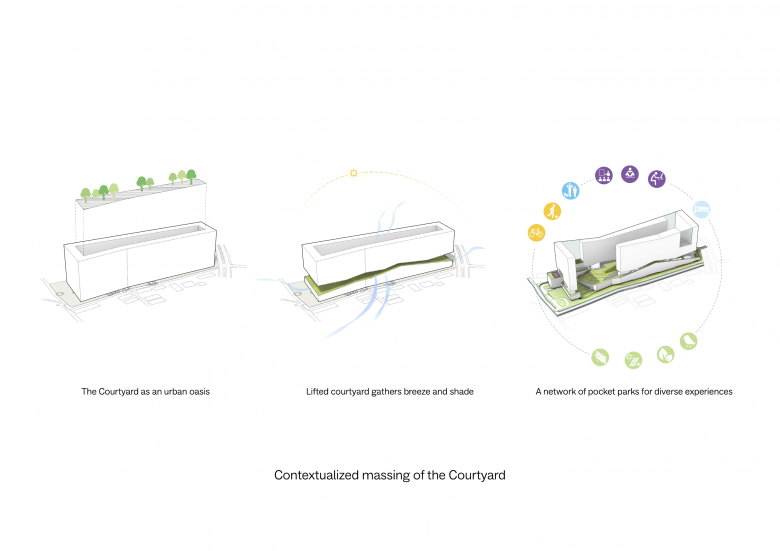
The design takes cue from Bangkok’s layered urban fabric, with a massing that responds to local climate conditions through iterative environmental wind and solar engineering. In contrast to the city’s ubiquitous vertical towers, the 250,000 m² development was conceived as an architecture of horizontality, blurring the boundaries between architecture and urbanism. Its diverse programs are organized around an open-air courtyard – the social and climatic heart of the project. Nestled between the tower and podium, the elevated courtyard serves as an innovative response to Bangkok’s flood-prone, heat-intense climate, providing passive shading and natural ventilation.
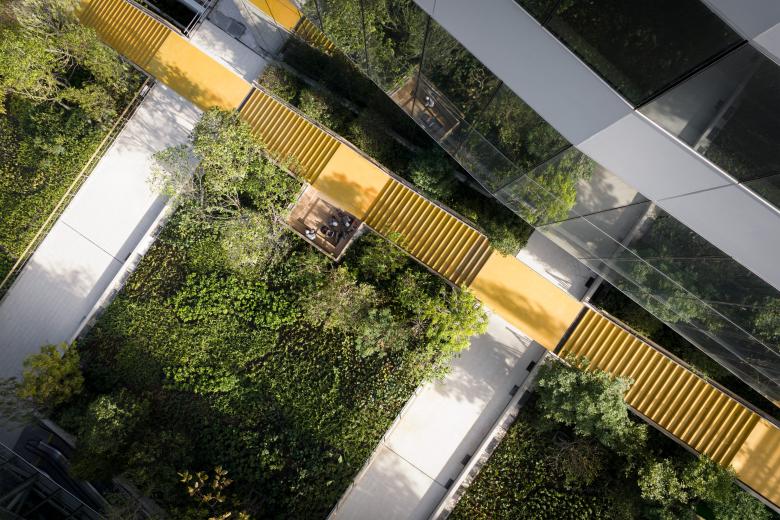
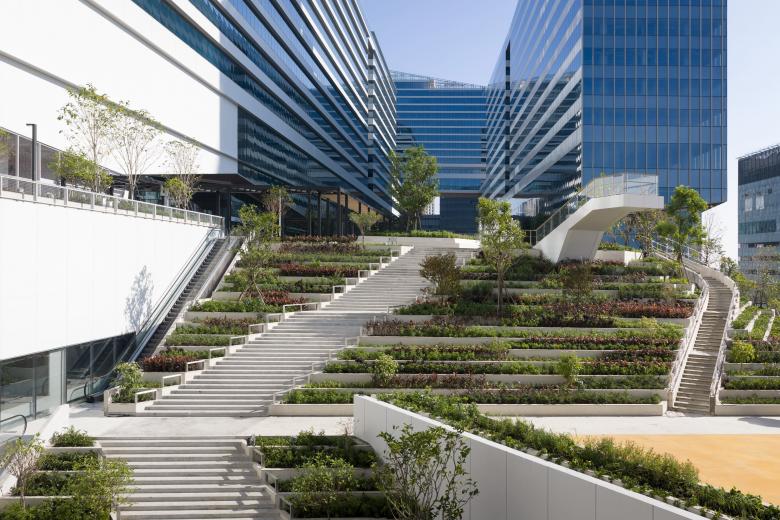
Acting as an urban lung, the elevated landscape filters air, mitigates heat, and supports biodiversity. The carefully curated planting strategies turn the green spaces into active contributors to public health. Layered with diverse species, the vegetation produces cleaner air, while shaded corridors with dense foliage reduce the urban heat island effect, creating a comfortable microclimate. Strategically distributed soil and planting patches serve as ecological stepping-stones, encouraging wildlife and enhancing urban biodiversity.
A Creative Park for All
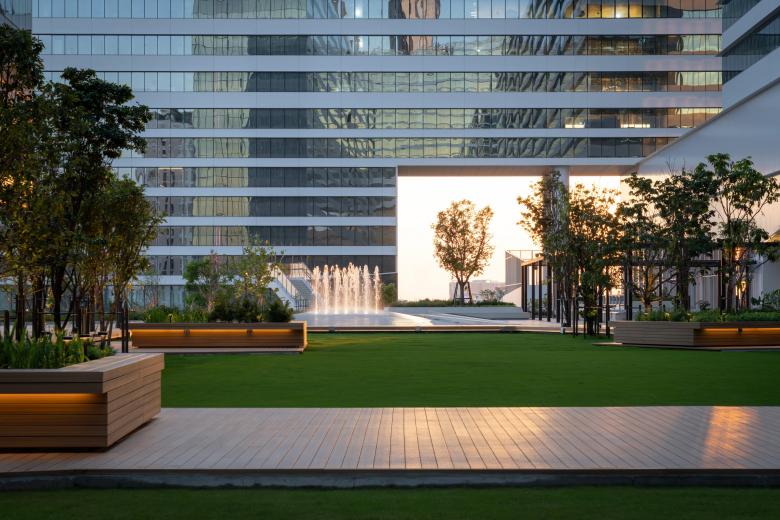
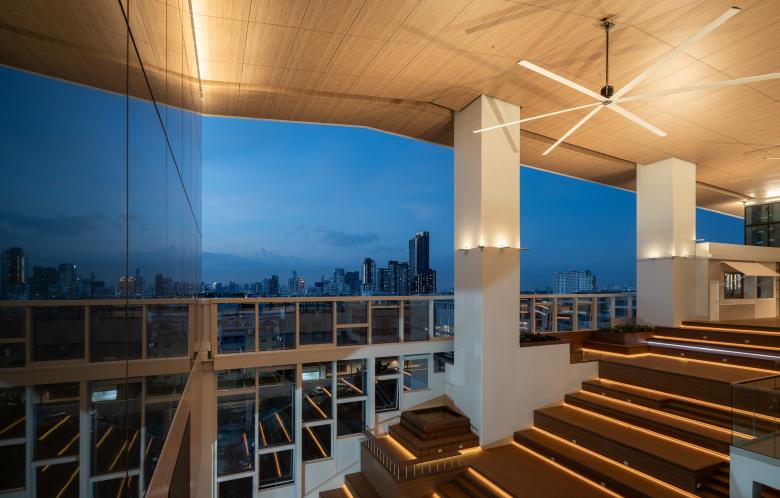
At the heart of Cloud 11 is a landscape that serves as vital infrastructure for social wellbeing and ecological resilience. Conceived as an “Adaptable Highland,” the vast green space is elevated above Bangkok’s flood-prone ground, creating a safe and welcoming civic topography within a comfortable microclimate where people can gather, play, and connect. The centerpiece is Thailand’s largest elevated lawn – a flexible plateau for festivals, performances, picnics, and everyday recreation.
Framed by a central courtyard and complemented by a network of pocket parks, the landscape offers something for everyone as a social condenser. Sports courts and playgrounds cater to younger visitors, while therapy gardens and rest pockets serve older generations. Cultural spaces, meanwhile, provide a stage for community gatherings and events. By clustering these active, playful, and mindful zones, the design fosters intergenerational and intercultural exchange.
Expanding on this civic role, community farms, herbal gardens, and water playscapes invite participation, learning, and shared stewardship – transforming the green infrastructure into a platform for civic responsibility. To ensure accessibility to all, from children and parents to the elderly and those with disabilities, the design incorporates universal ramps, outdoor lifts, shaded walkways, and a fine-grained circulation network – from alleys and plazas to escalators and streets. The generous public spaces are open 24/7, enabling diverse communities to engage with the landscape at any time.
Integrated Sustainability and Cultural Grounding
Cloud 11 is dedicated to both environmental and social sustainability. Green roofs, shaded façades, and natural ventilation reduce energy demand, while porous pavements, bioswales, rain gardens, and gravel filtration planters manage stormwater through ecologically responsible infrastructure. Seating crafted from milled timber and recycled plastics reduces waste while creating colorful, durable low-carbon social furniture.
The project’s planting palette draws on locally sourced flora, enhancing water retention for Bangkok’s heavy rainfall and bolstering environmental resilience, while also fostering cultural resonance. By preserving mature trees as anchors of collective memory and integrating them as living landmarks, the design ties ecological value to heritage. The reinterpretation of the site’s history of orchards, reed fields, and rice paddies into a contemporary elevated park connects the community to its cultural roots while offering vibrant green spaces for the future.
The elevated landscape creates a platform to seamlessly integrate living, working, and leisure functions, ensuring social sustainability. Creator villages, advanced production studios, hotels, educational centers, and market halls interlock within a coherent urban framework, with circulation networks weaving these programs together to enhance accessibility and foster spontaneous encounters. The result is an adaptable, 24-hour district where urban life unfolds across scales and levels for occupants, residents, and visitors alike.
More than just a building complex, Cloud 11 is a transformative new creative park for Bangkok. By integrating sustainable landscaping strategies, the development cultivates a civic realm that gives back to its surroundings, fostering environmental resilience, cultural resonance, and community bonds. Here, sustainability is socially connective — through play, rest, celebration, and care for the environment around us.
- Year
- 2025
- Project Status
- Built
- Client
- Magnolia Quality Development Corporation Limited (MQDC)
- Architecture and Landscape Architecture
- Snøhetta
- Collaborators
- A49 Architects and Shma Landscape