K・K Building
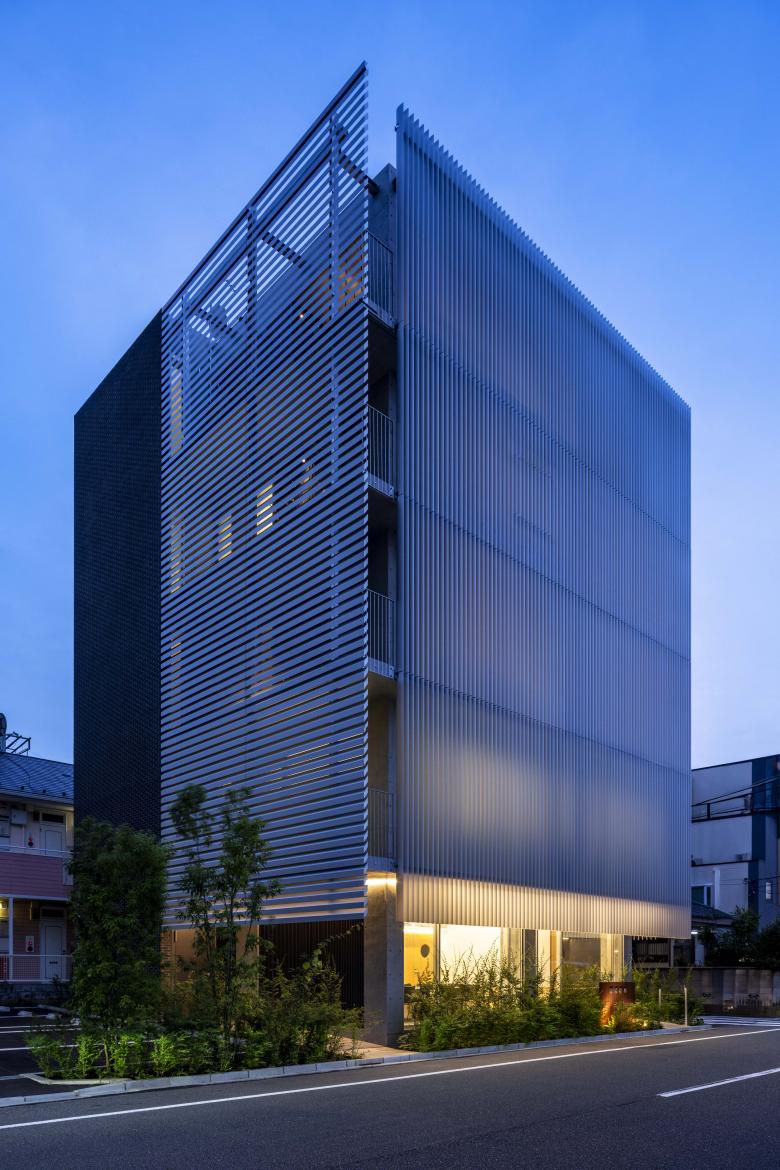
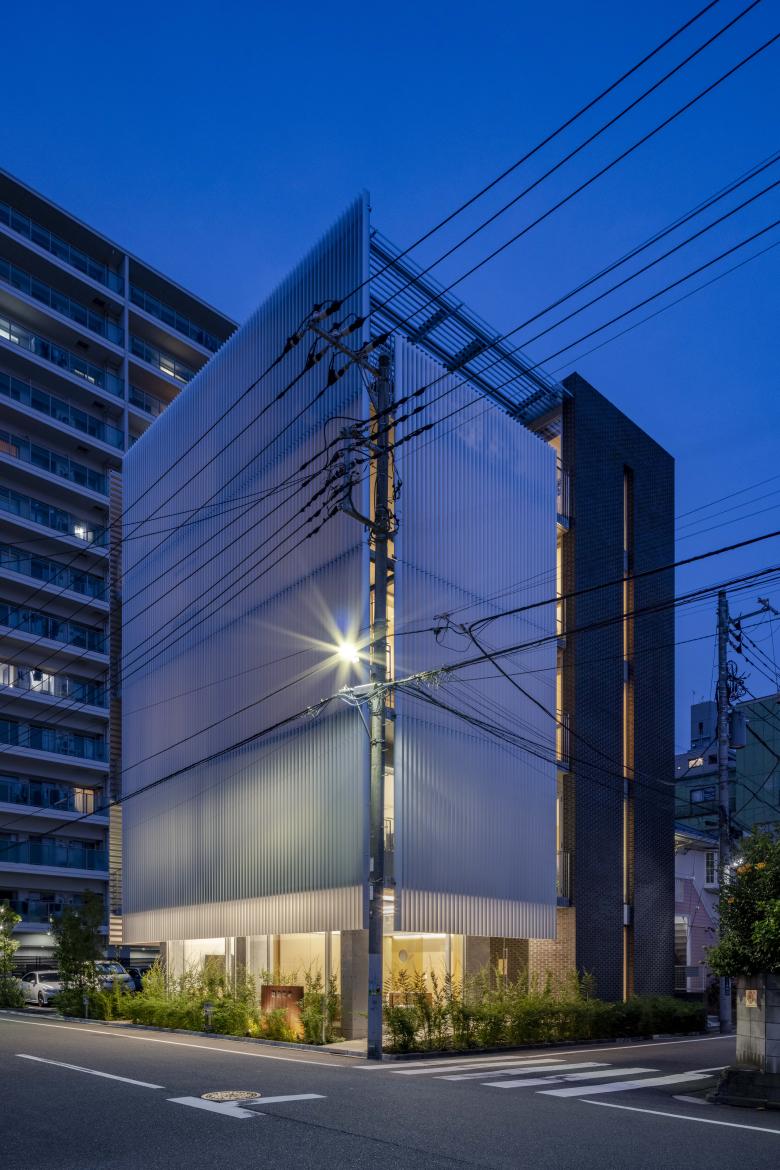
Lattice cube capturing light and wind
Design Concept
This project represents the headquarters redevelopment undertaken by Development Building Materials Co., Ltd. to pursue further technological innovation on the occasion of its 50th anniversary. The company has long been engaged in the research and development of aluminium louvers with superior sound insulation and waterproofing properties.
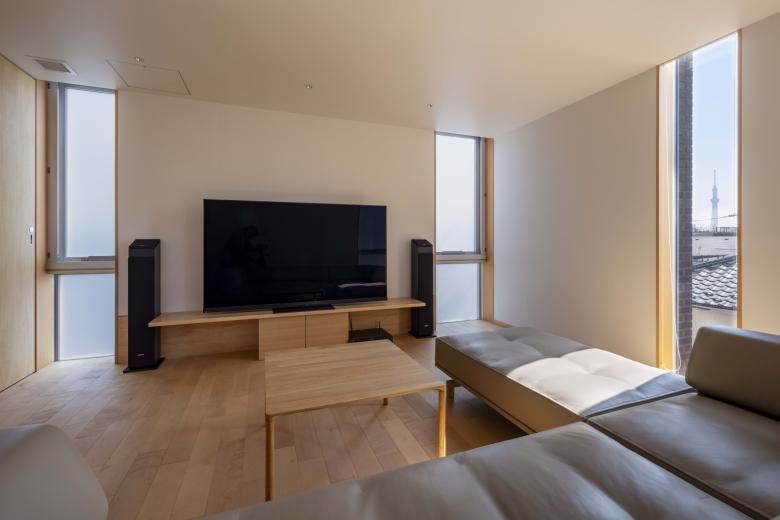
The site is located near the Arakawa River ,Tokyo, within an urban environment characterised by a mix of residential properties and small factories. From the upper floors, distant views of Tower Tokyo Skytree and the Metropolitan Expressway are possible. Within this context, the brief called for a beautiful building utilising aluminium louvers.
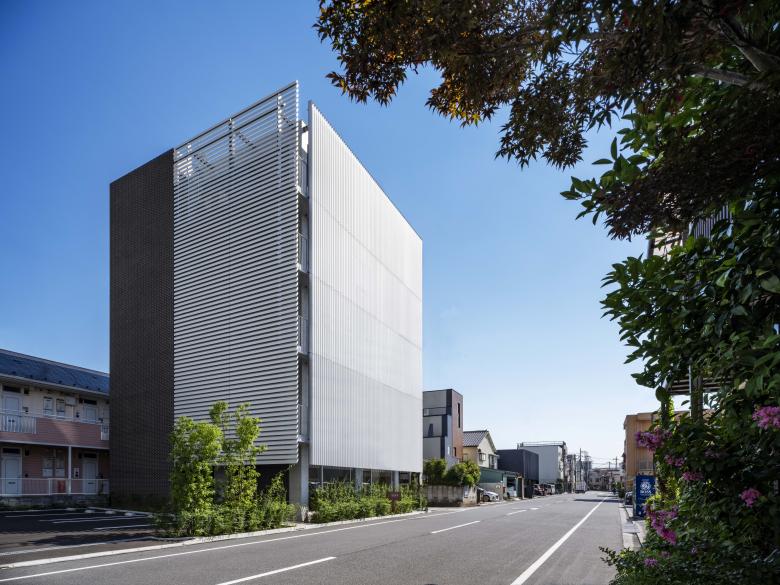
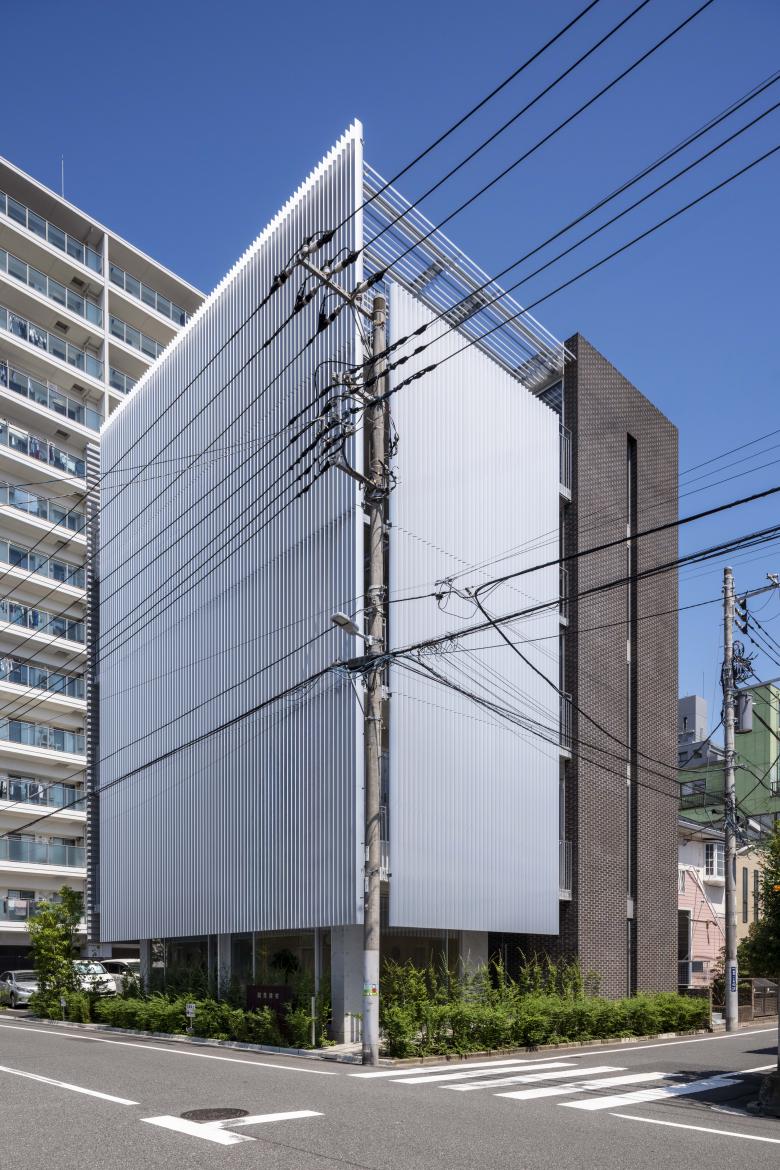
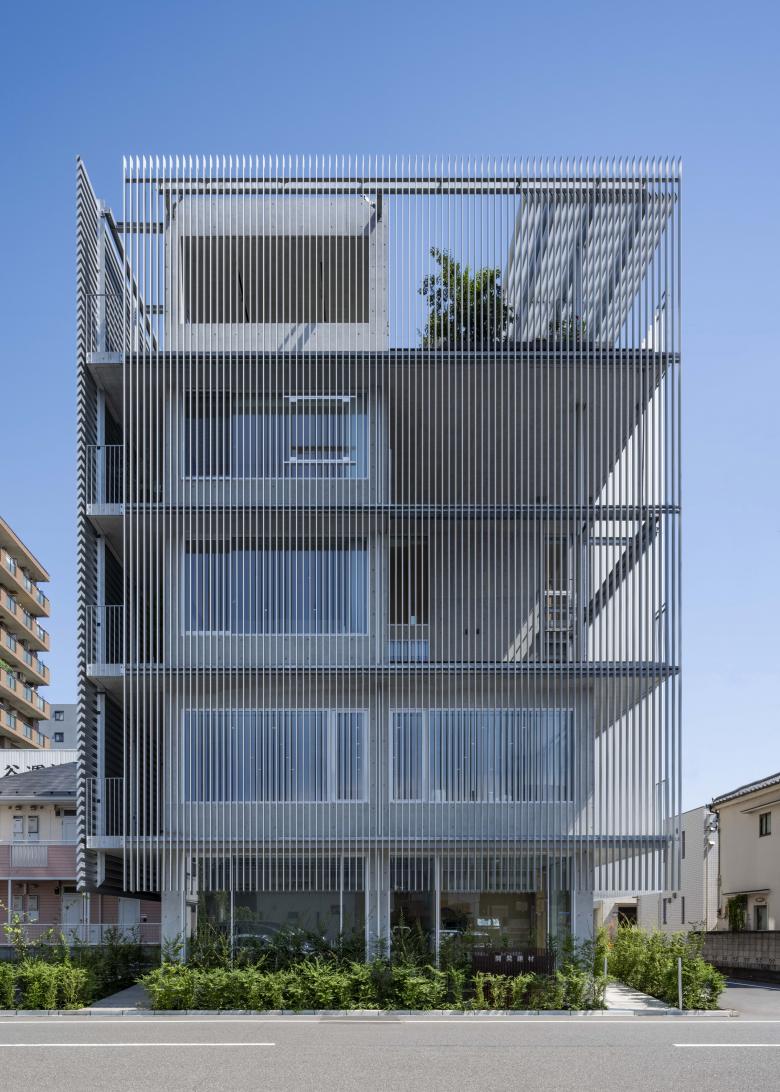
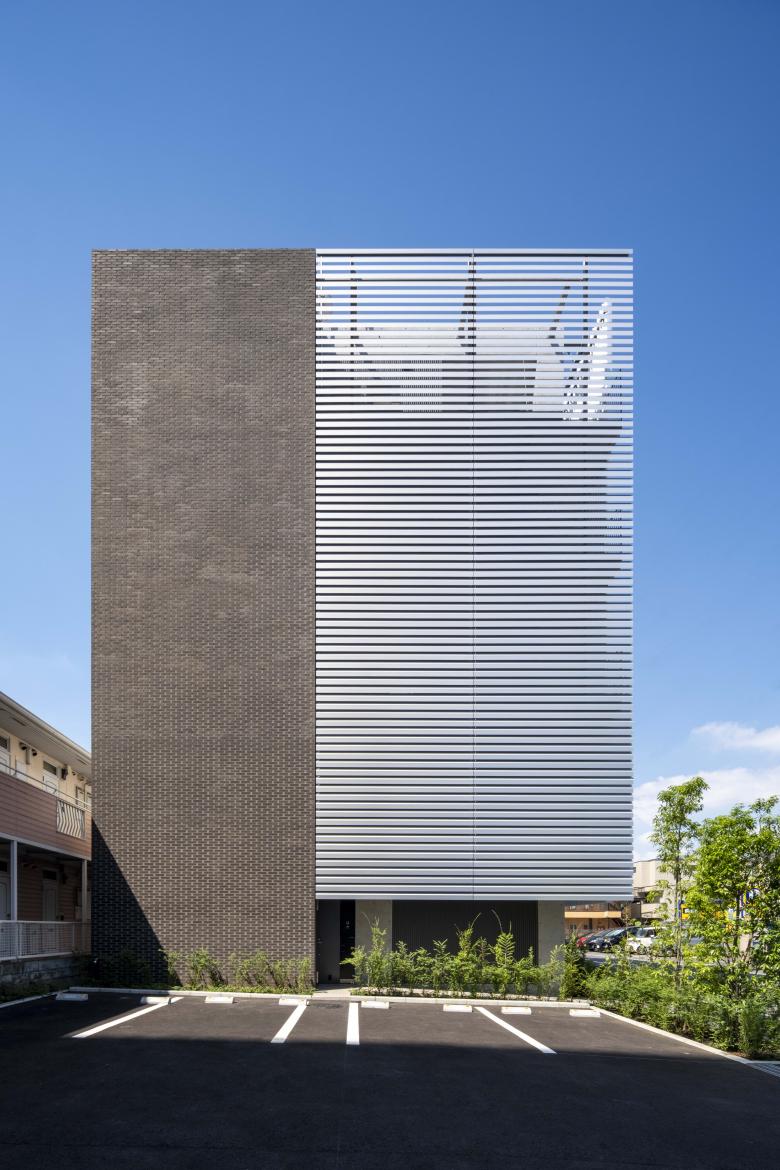
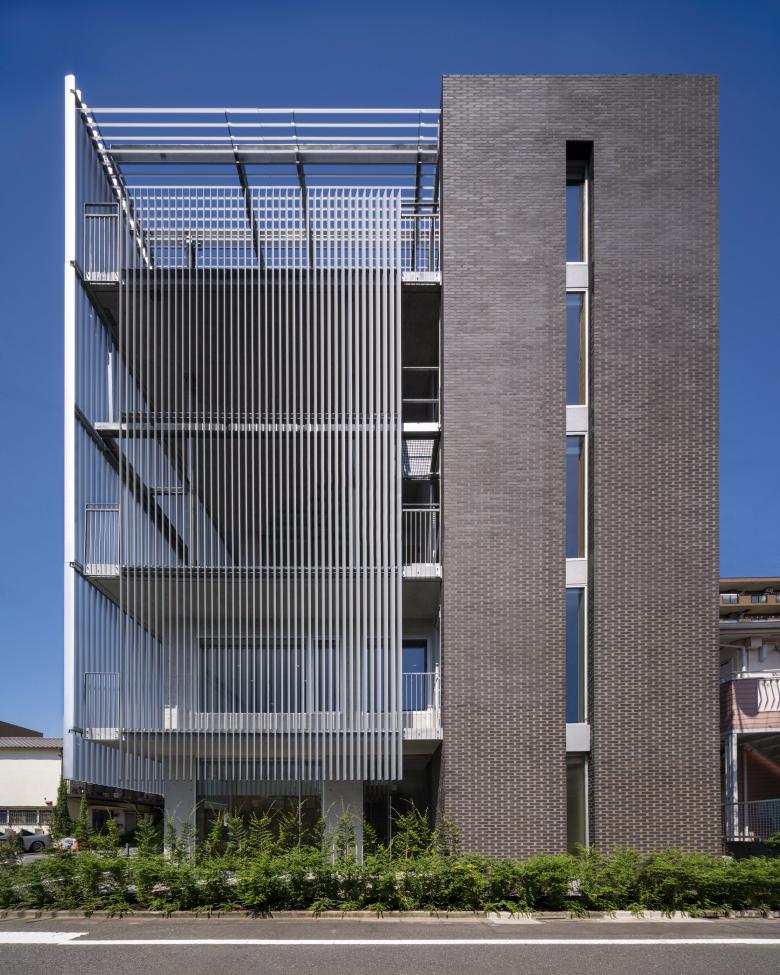
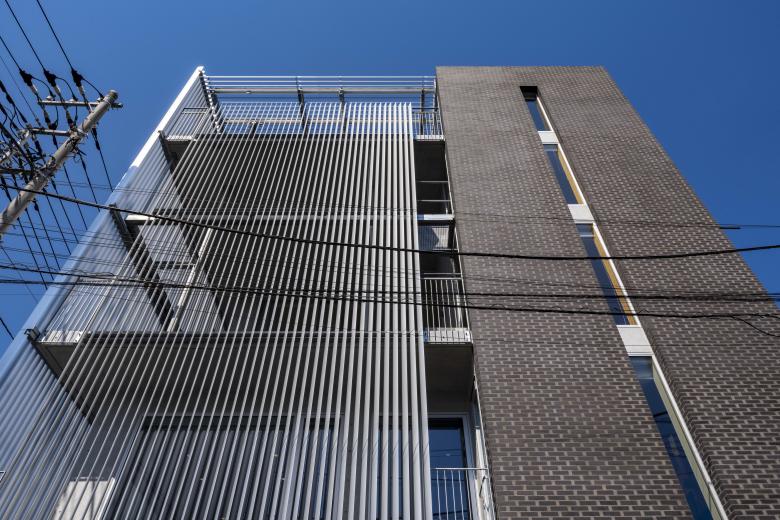
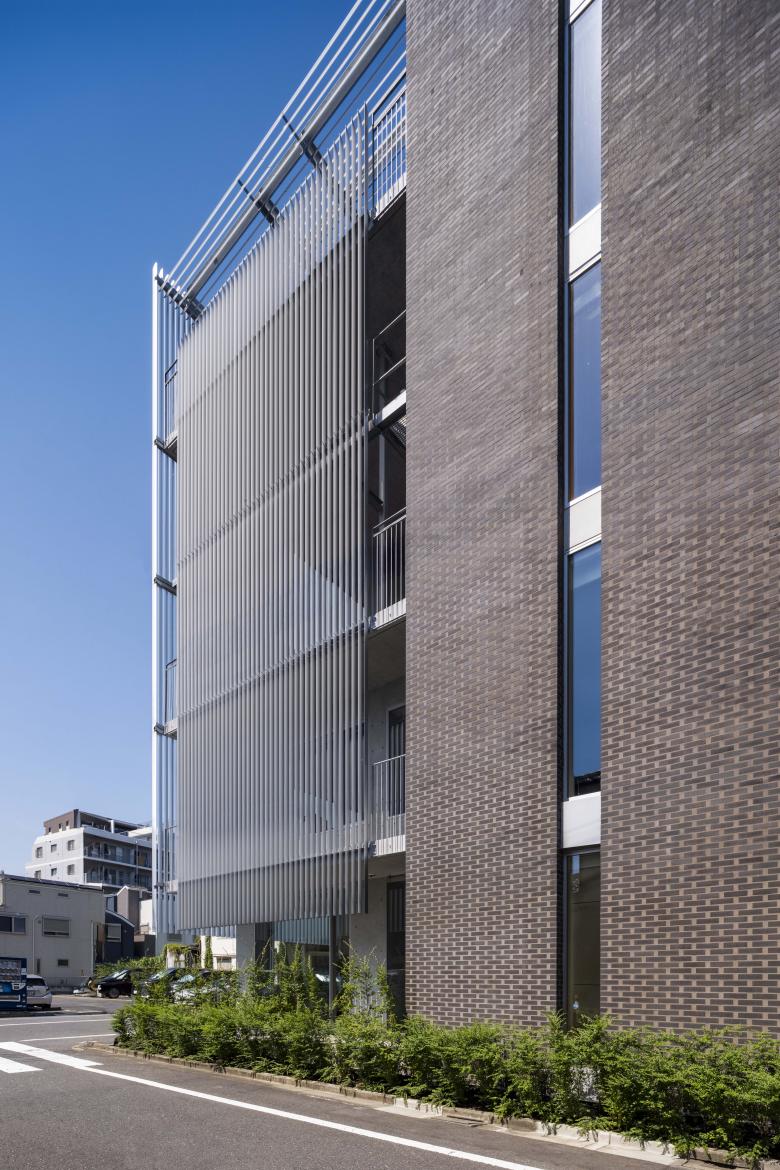
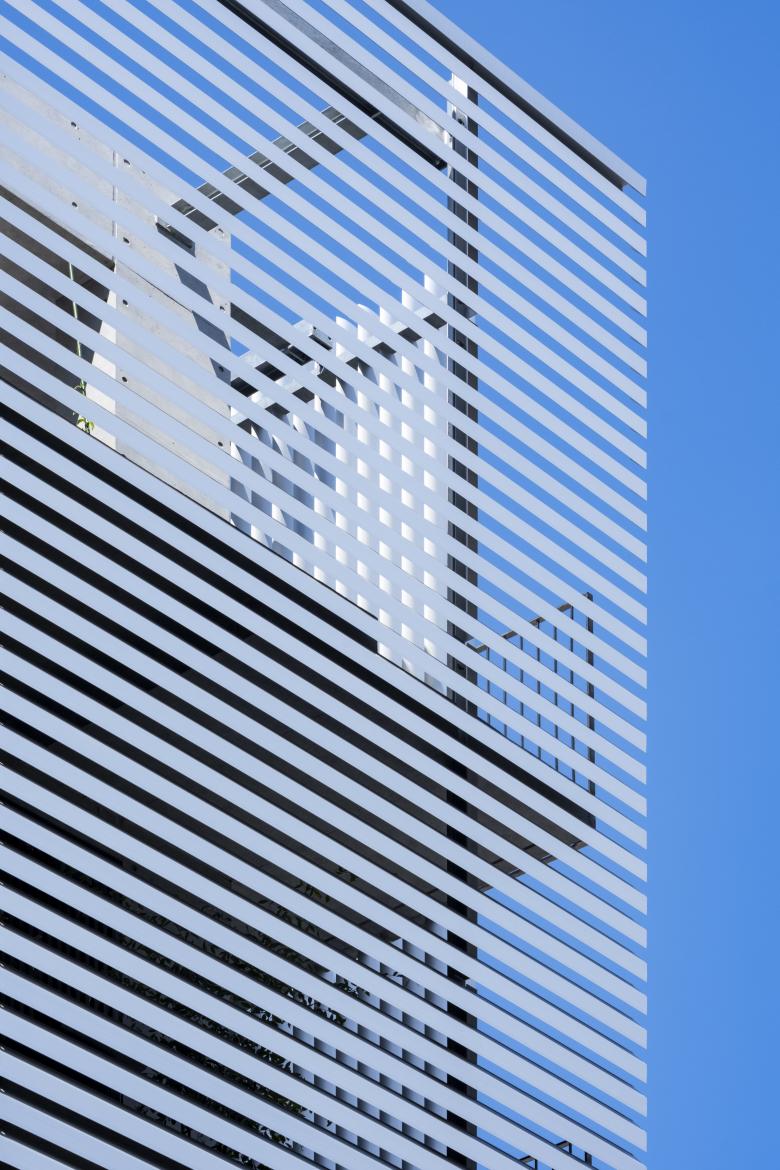
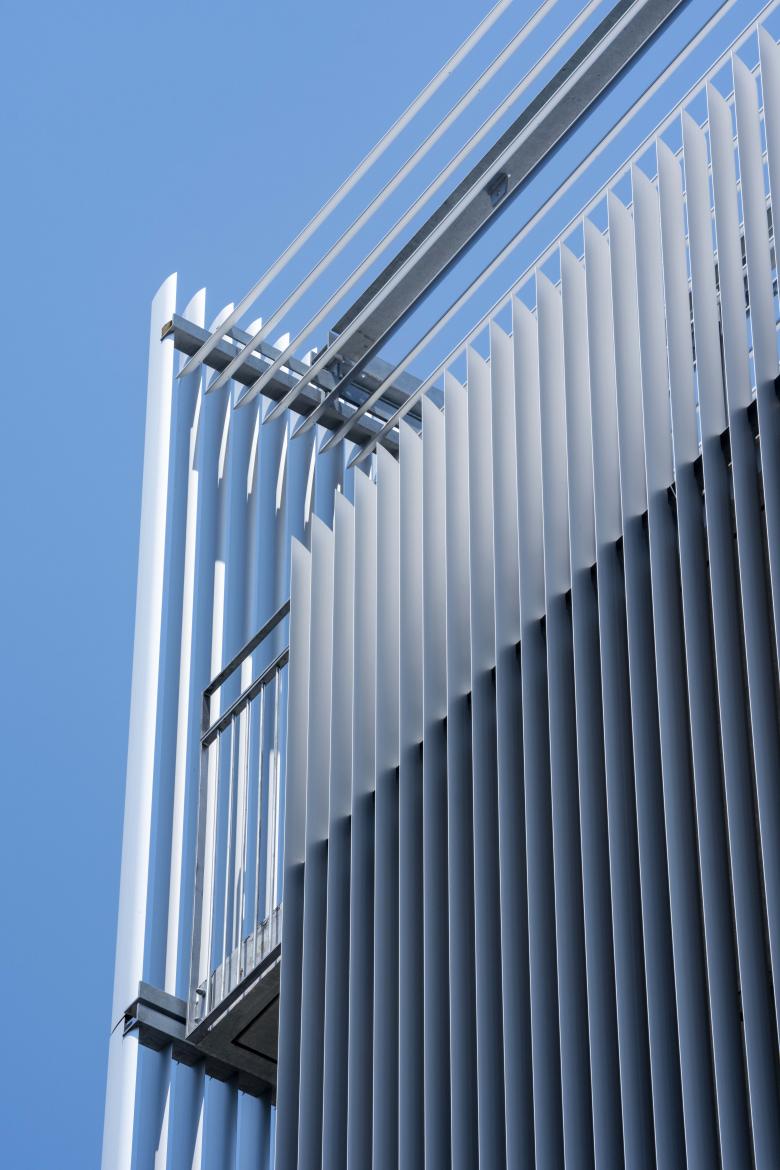
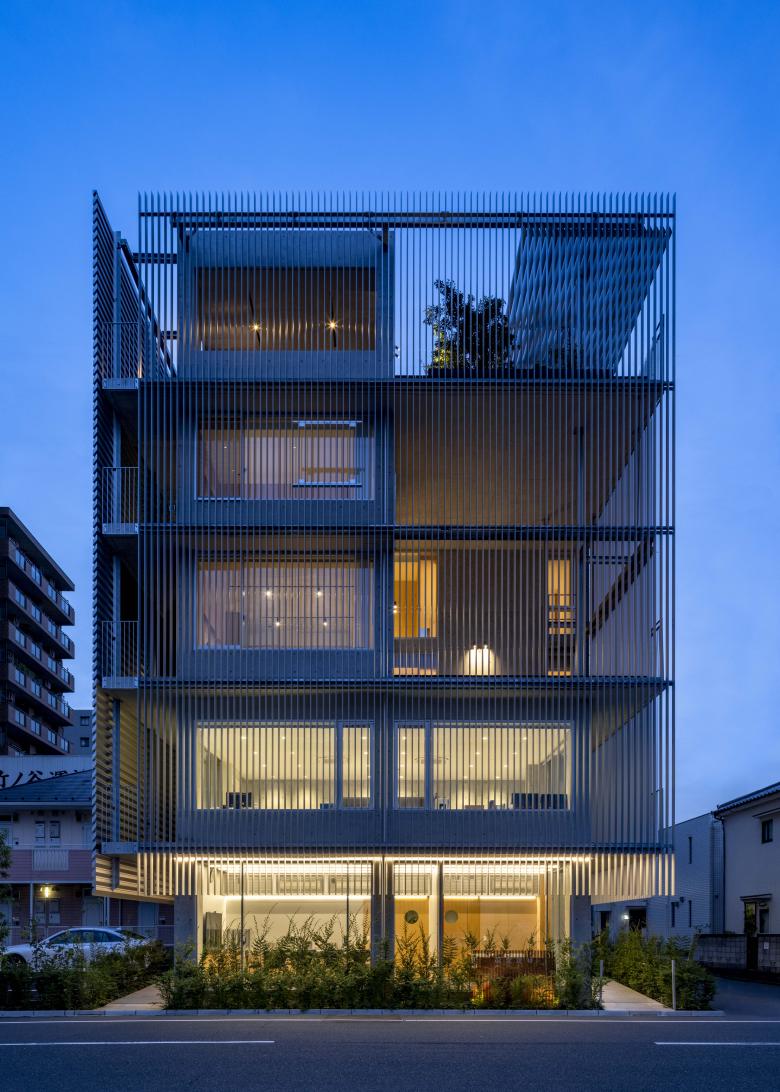
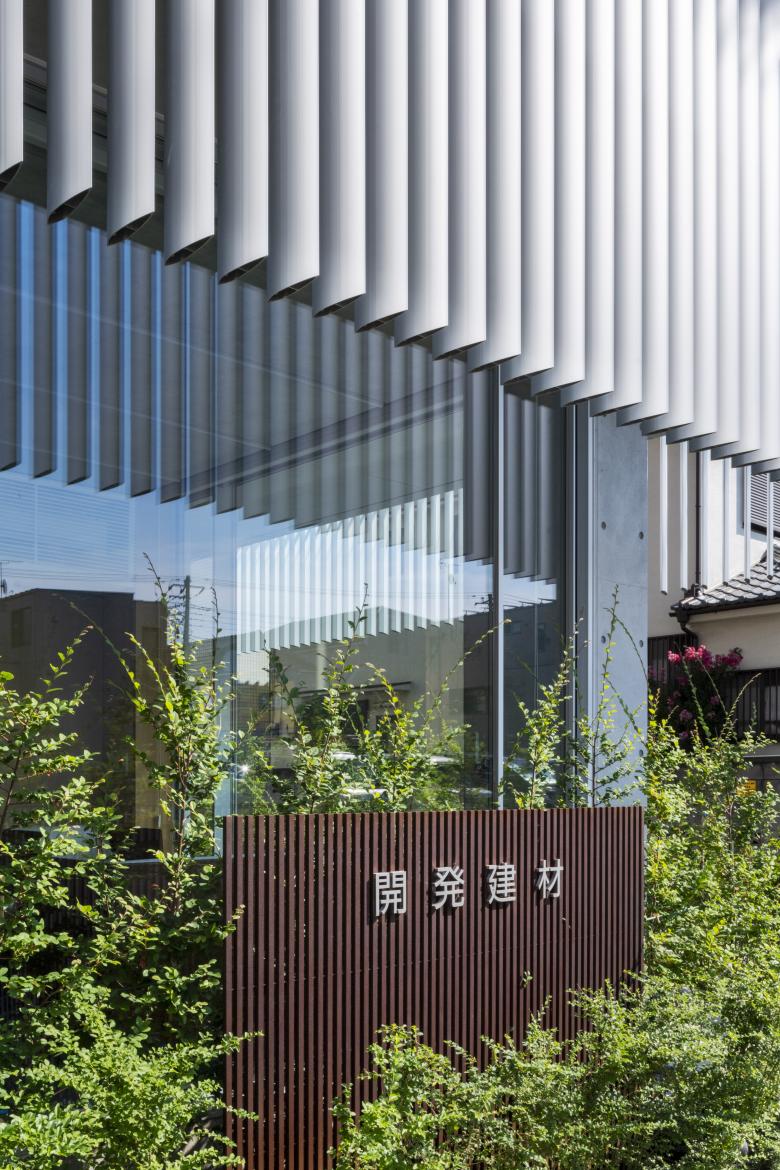
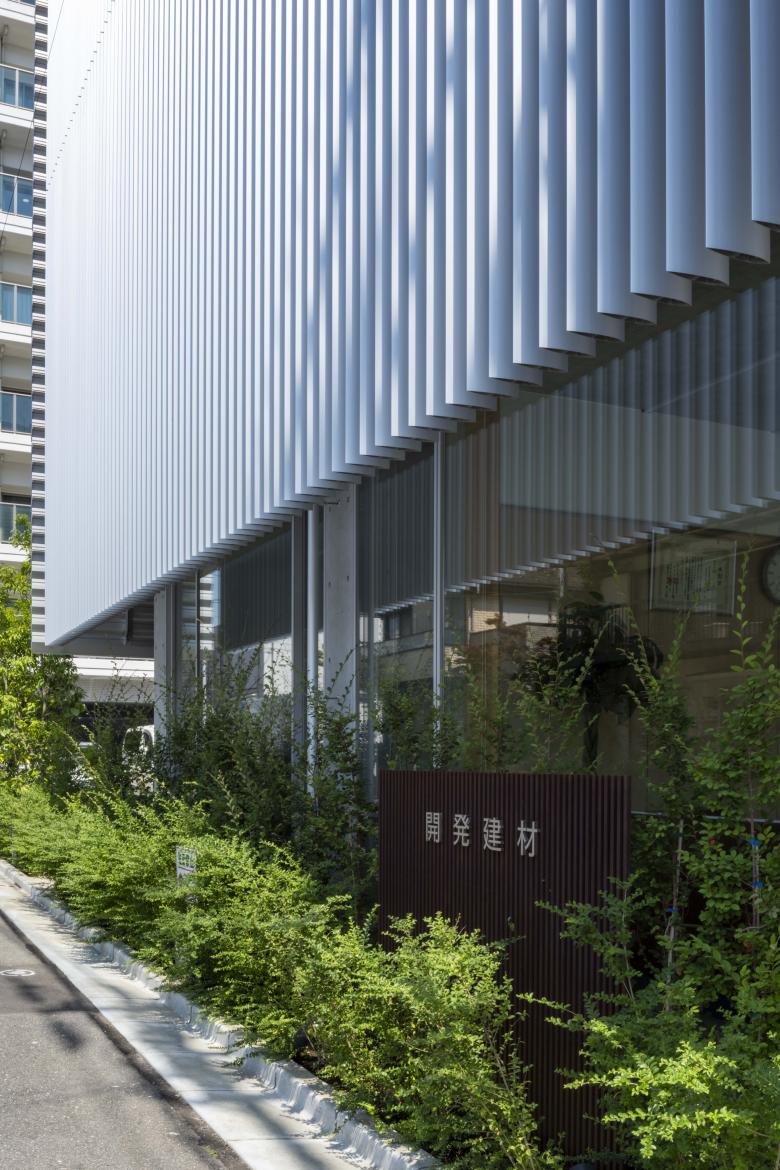
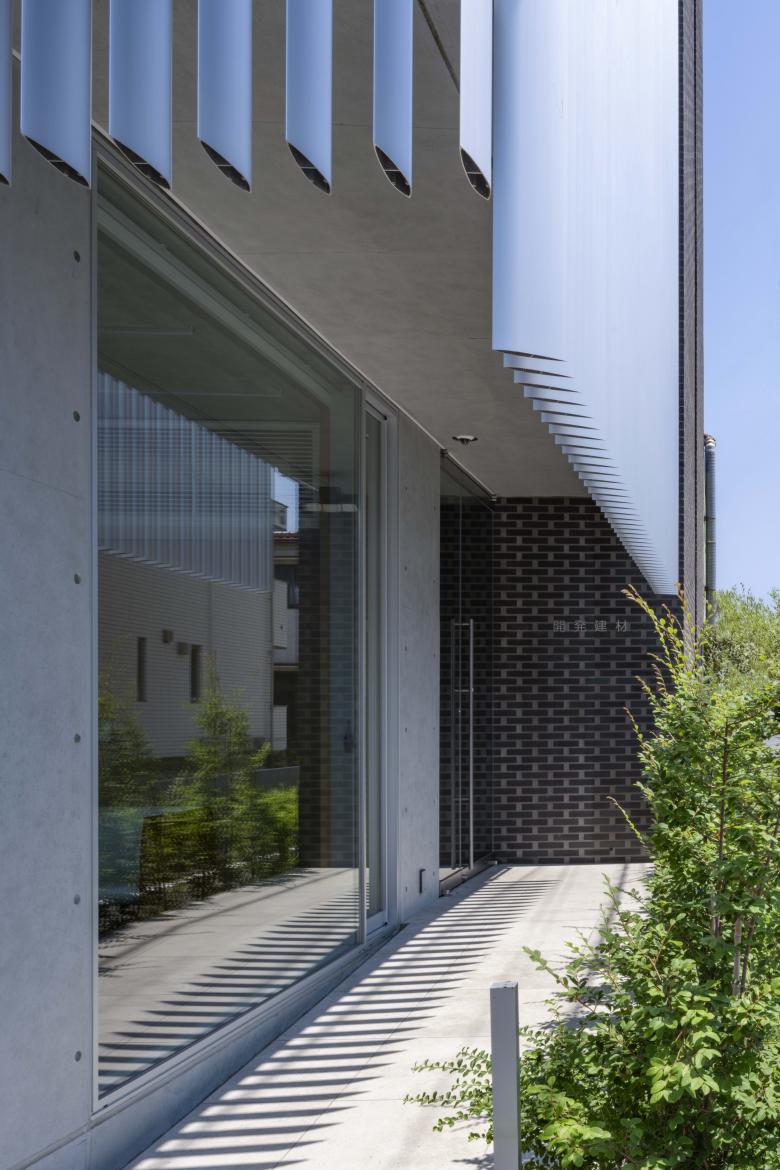
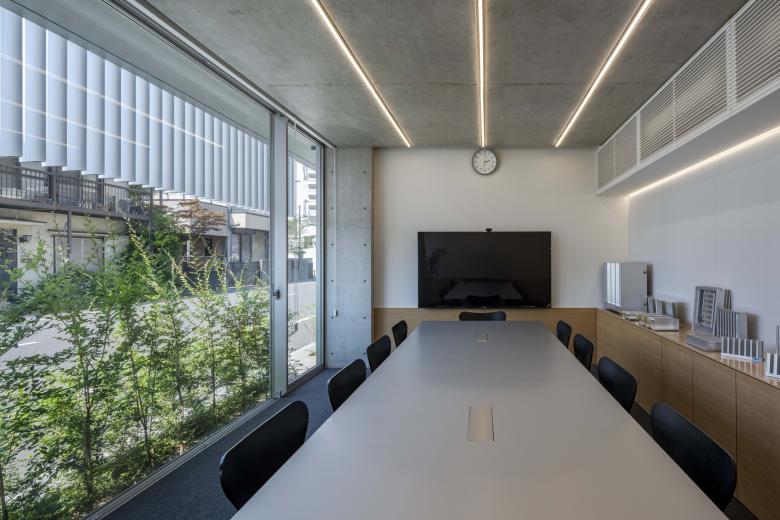
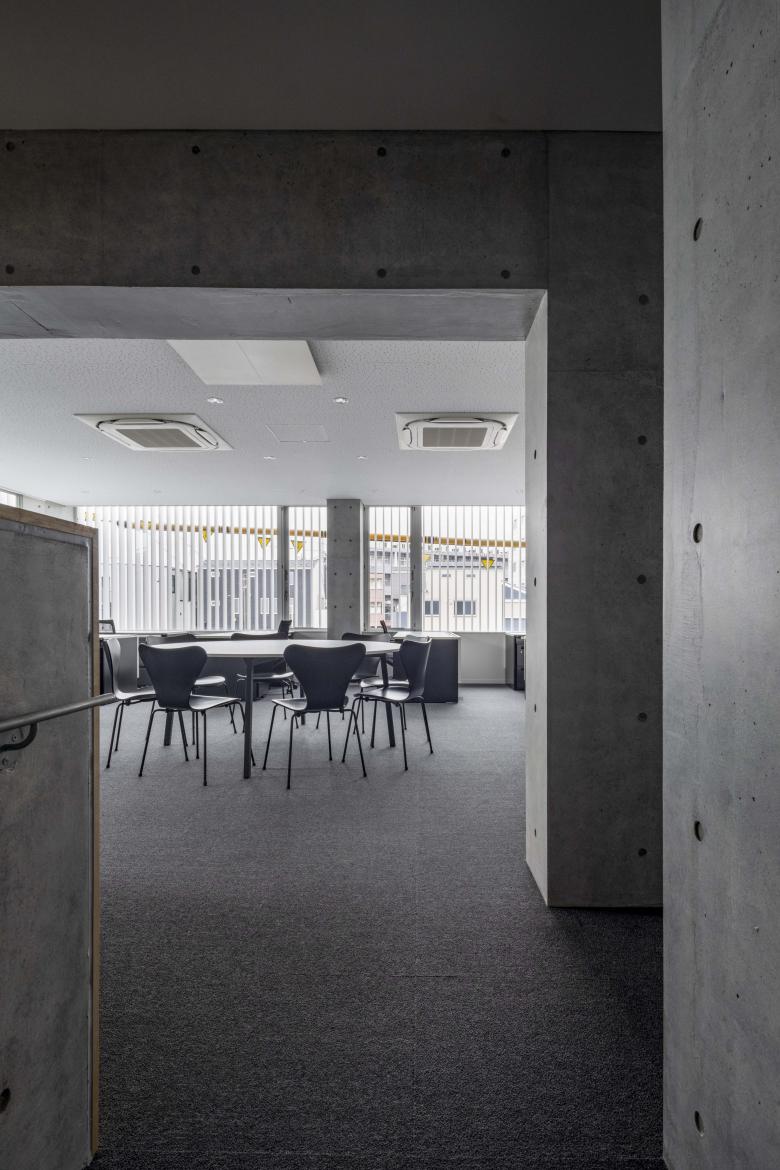
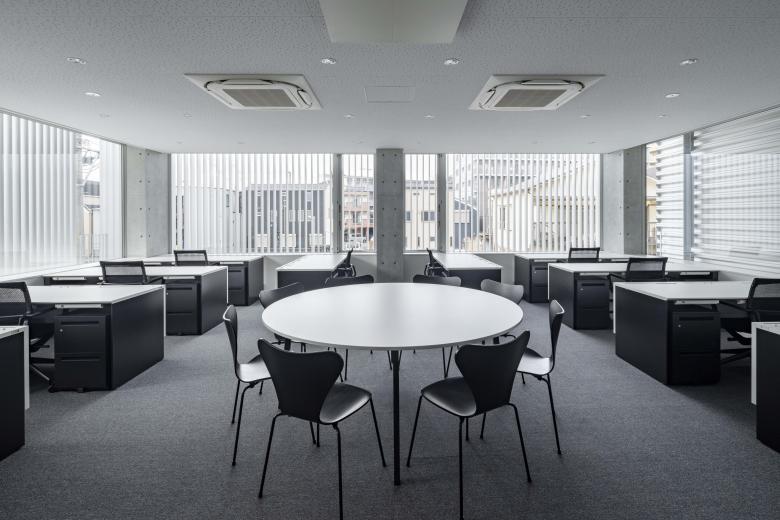
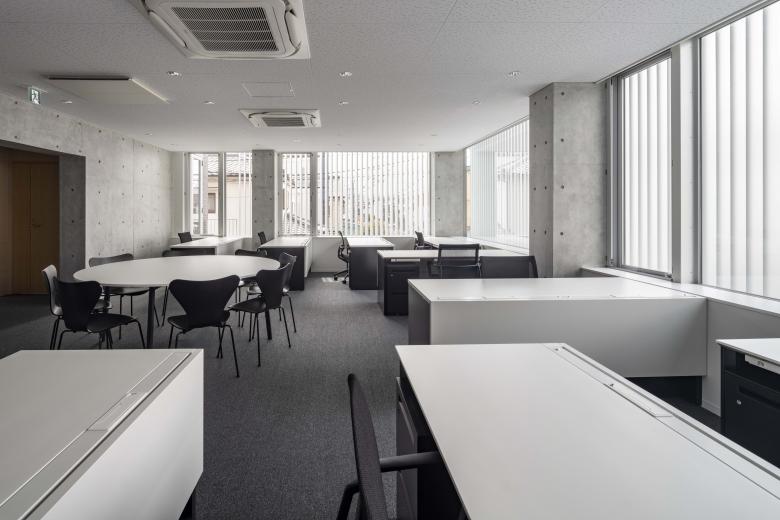
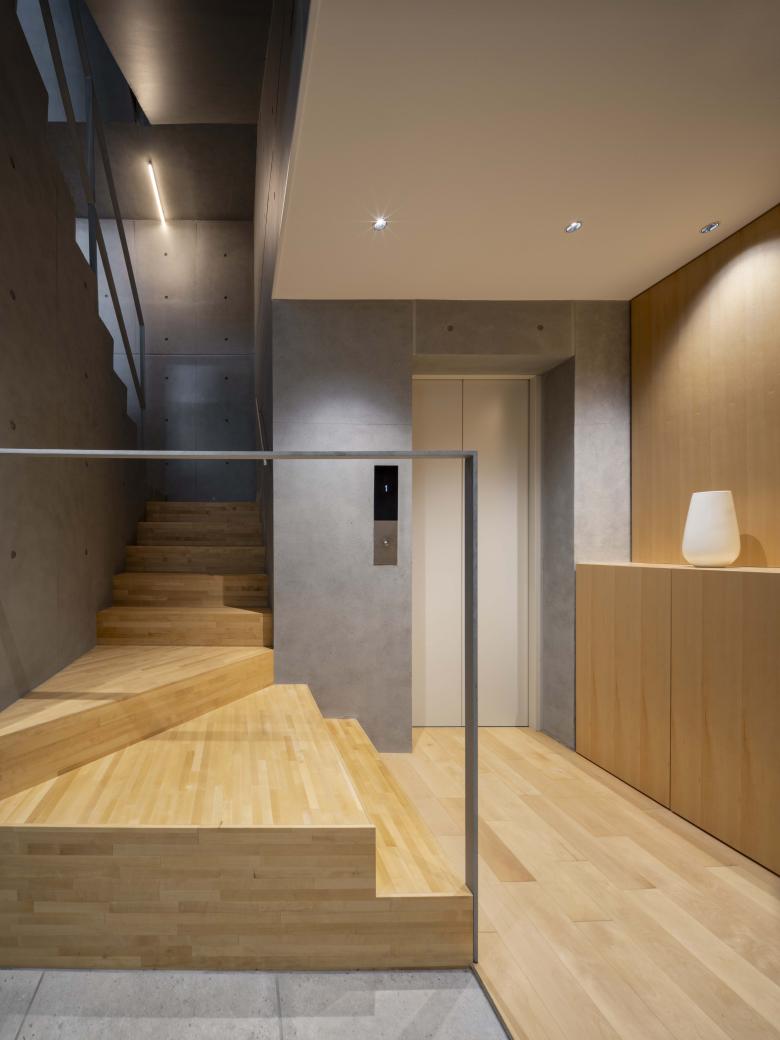
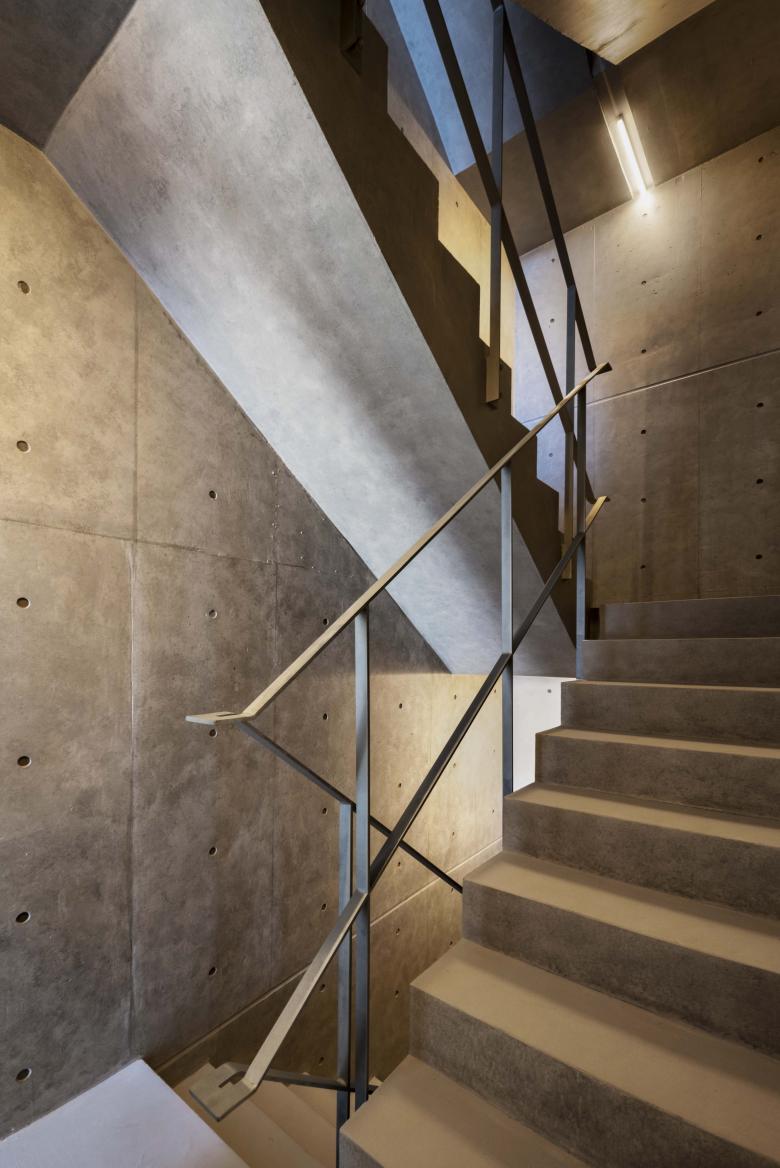
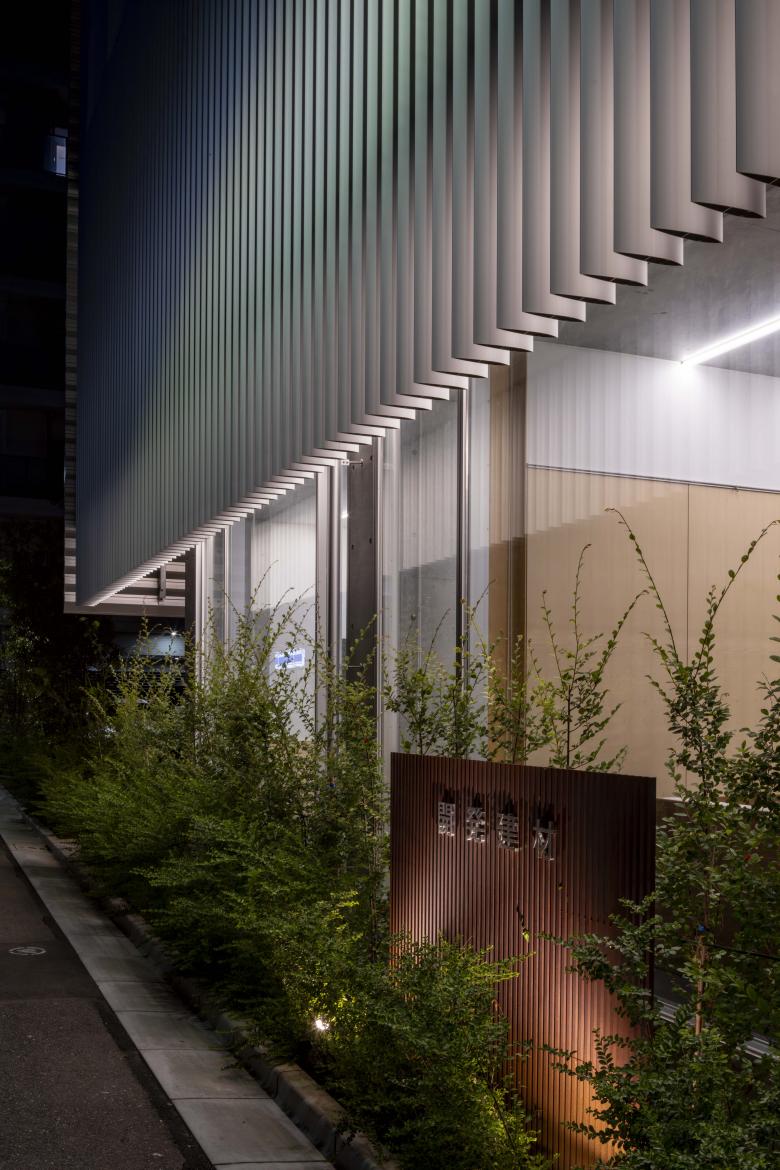
To maximise the favourable western views, the building was positioned on the southwestern corner of the site. It is a five-storey reinforced concrete structure with a square plan, housing offices on the first and second floors and residences on the third to fifth floors. The building is divided into two distinct zones: a closed area facing the neighbouring plot and an open area facing the road. The external envelope from the second floor upwards is clad in aluminium louvers. Furthermore, existing frameless privacy louvers were installed on the northeast elevation. For the residential spaces on the southwest and northwest elevations, which require strong control of the intense afternoon sun, new louvers were designed to guide stable reflected light into the interior.
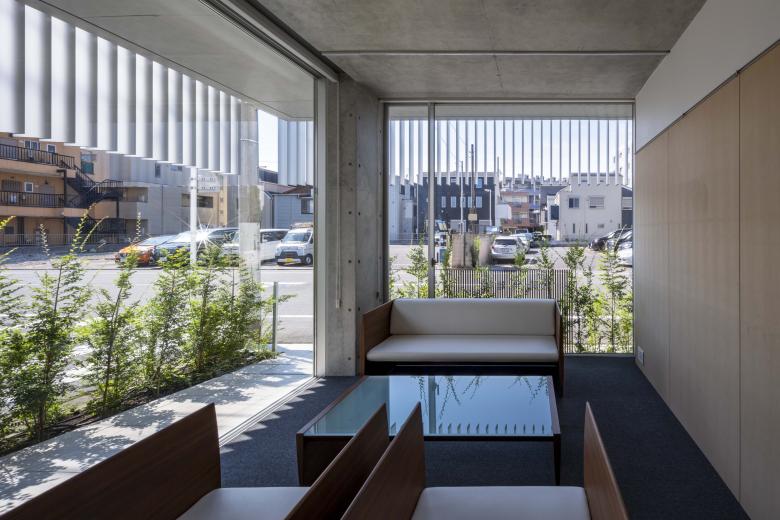
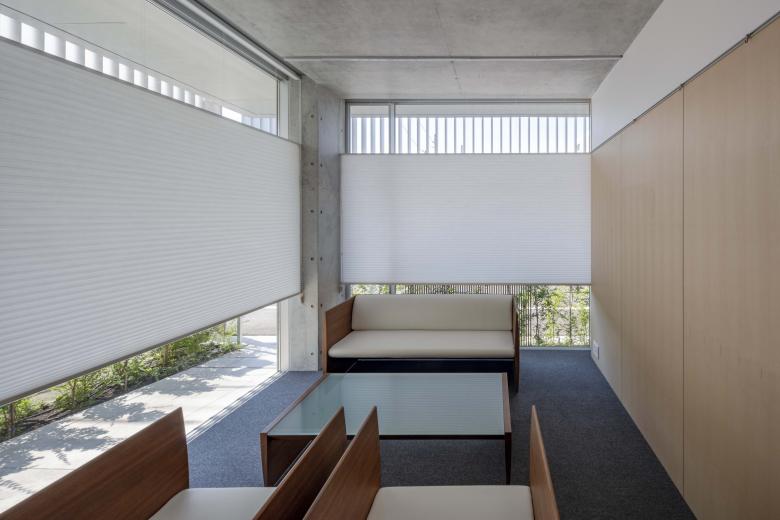
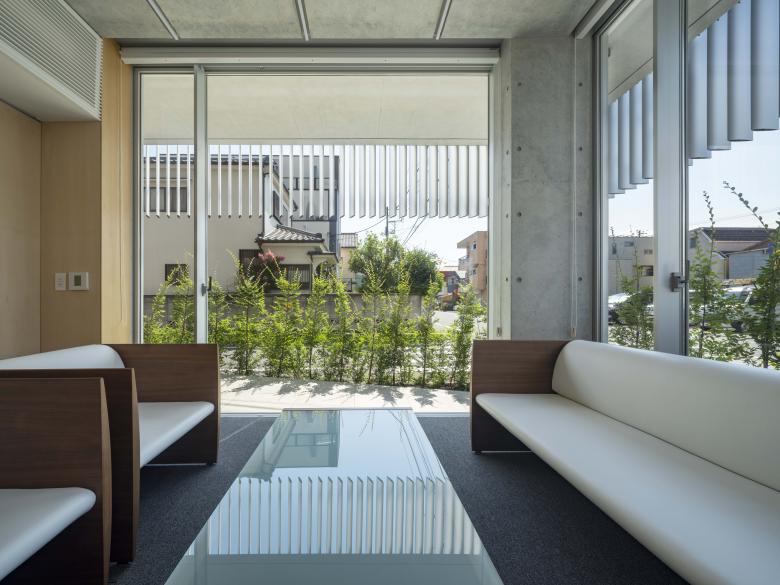
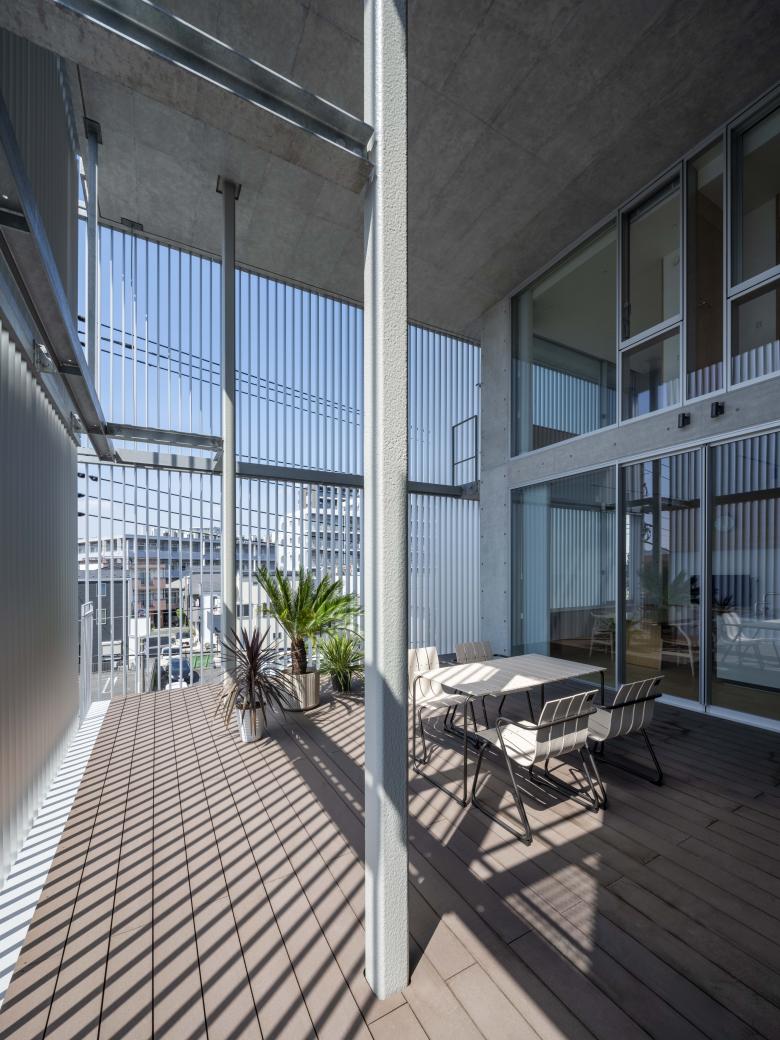
These louvers possess a cross-section resembling an aeroplane wing, offering visual appeal through light reflection and diffraction while minimising wind noise. They create a rich mediation between urban living and the external landscape, resulting in a stable light environment on the second-floor offices conducive to focused work.
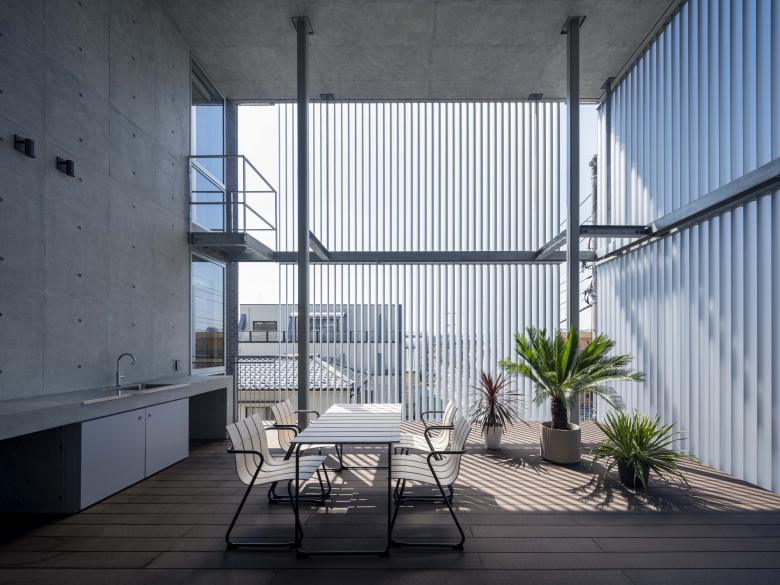
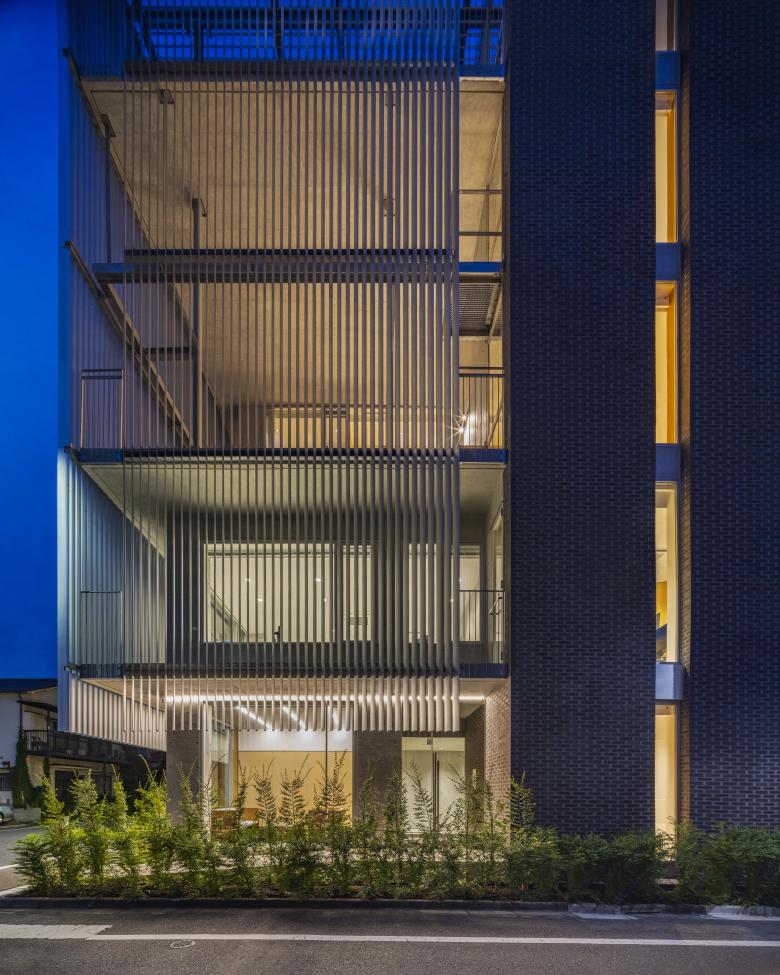
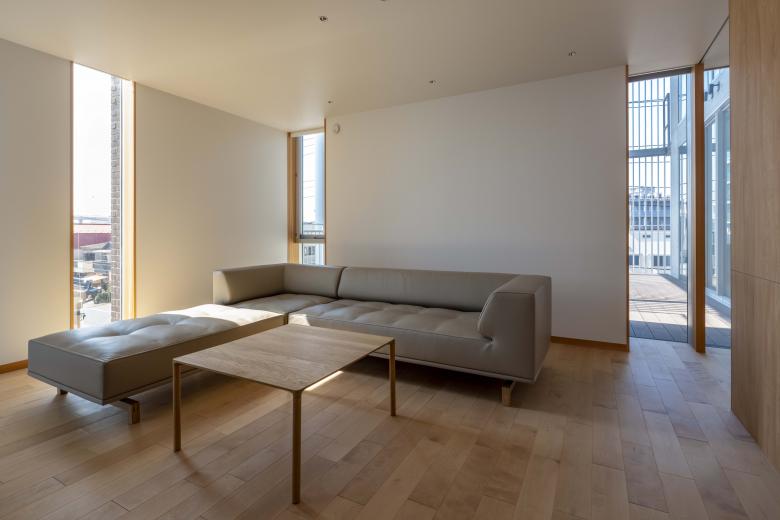
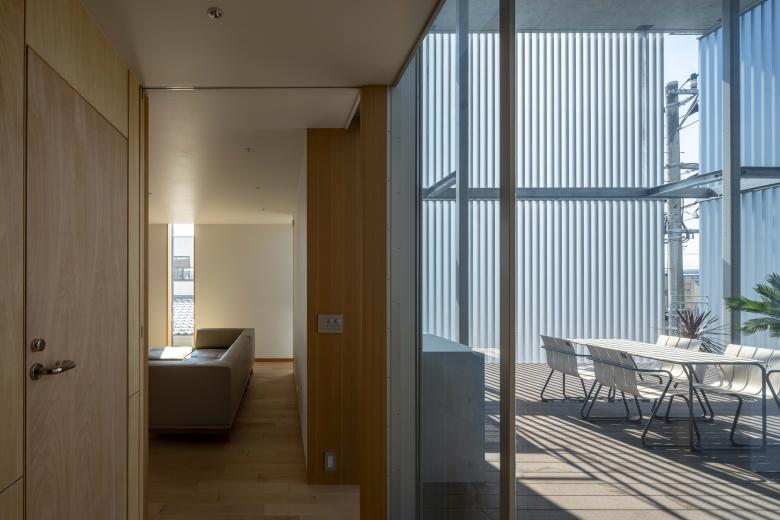
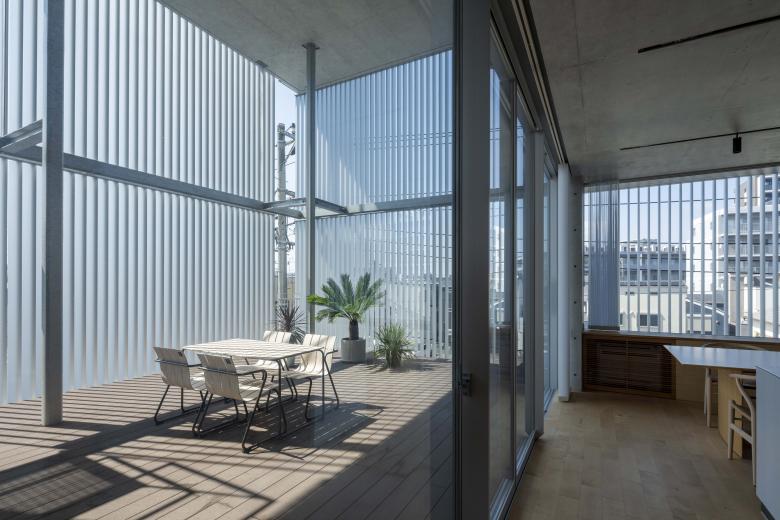
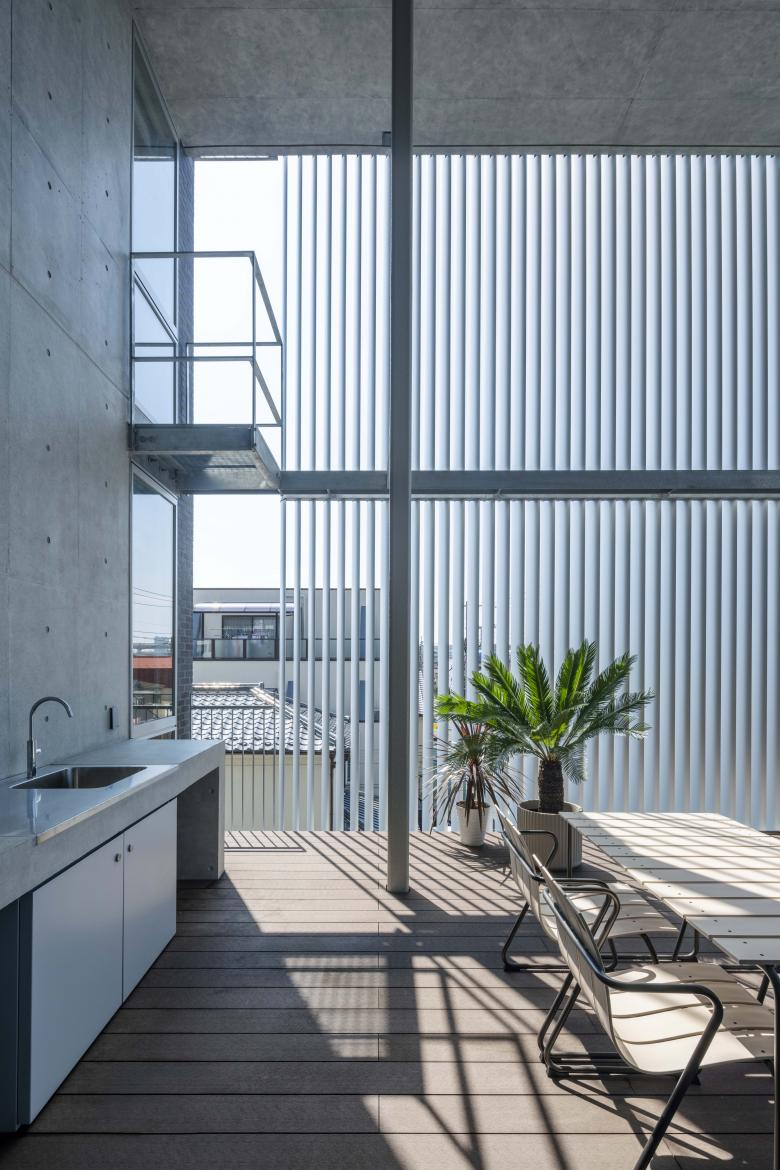
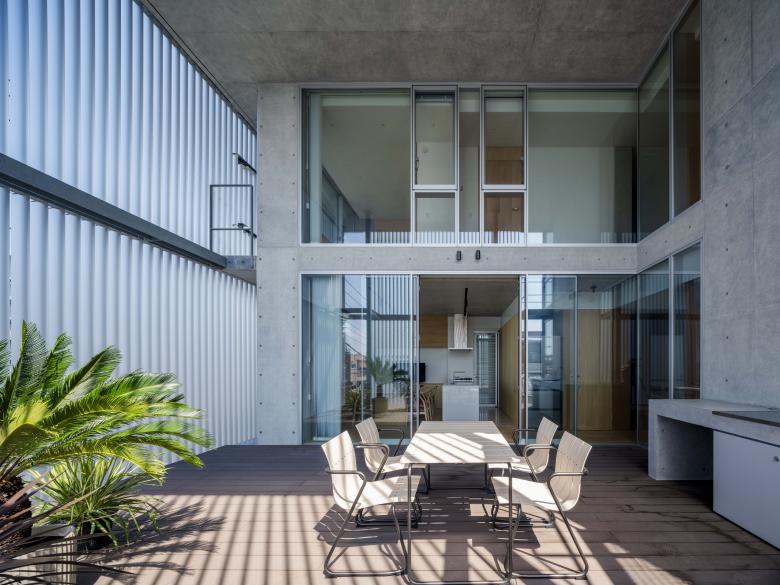
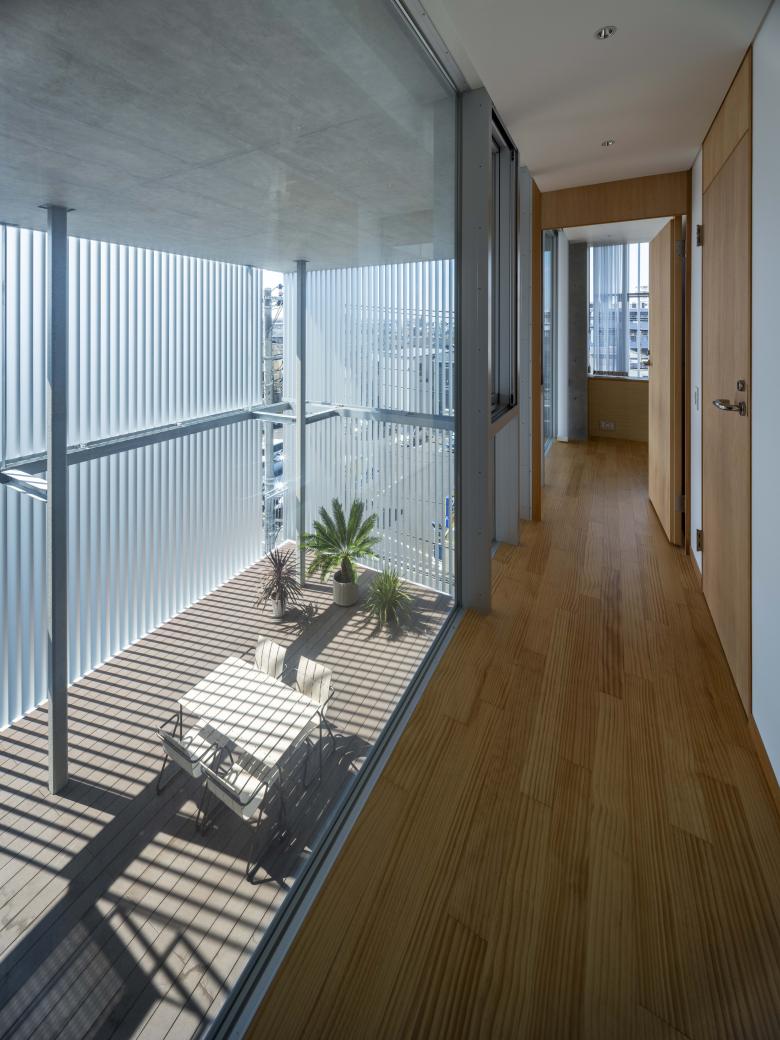
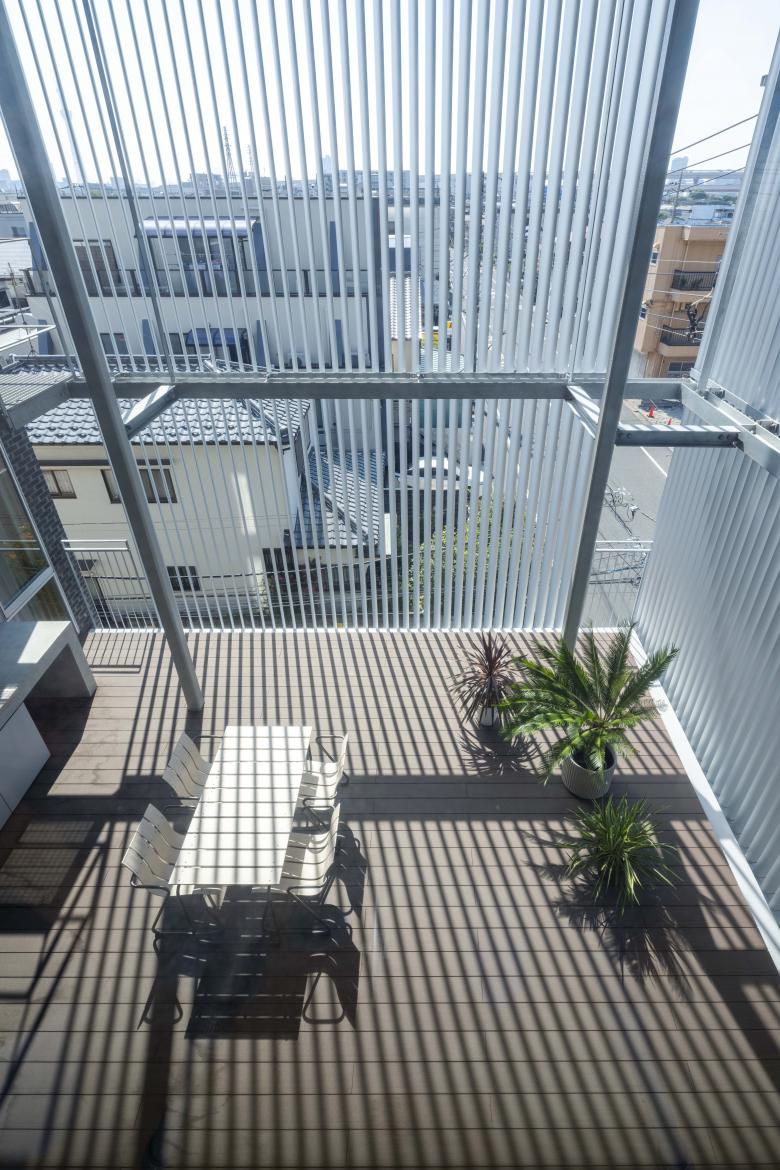
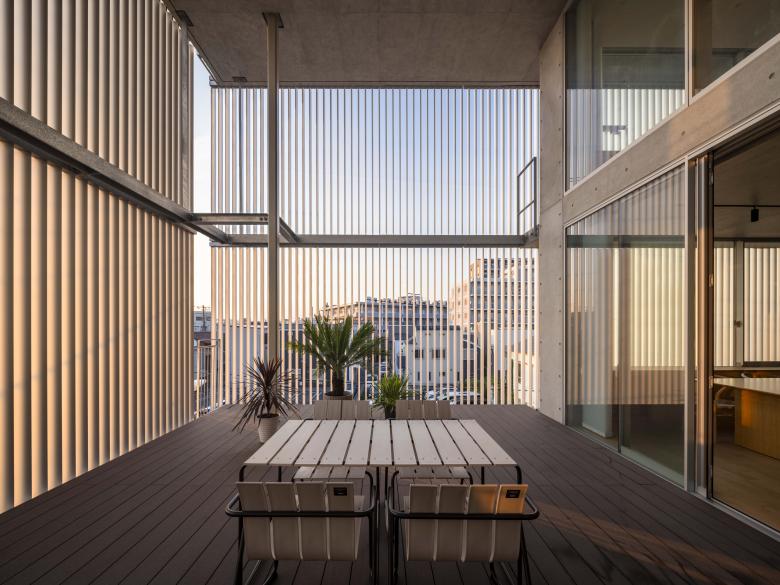
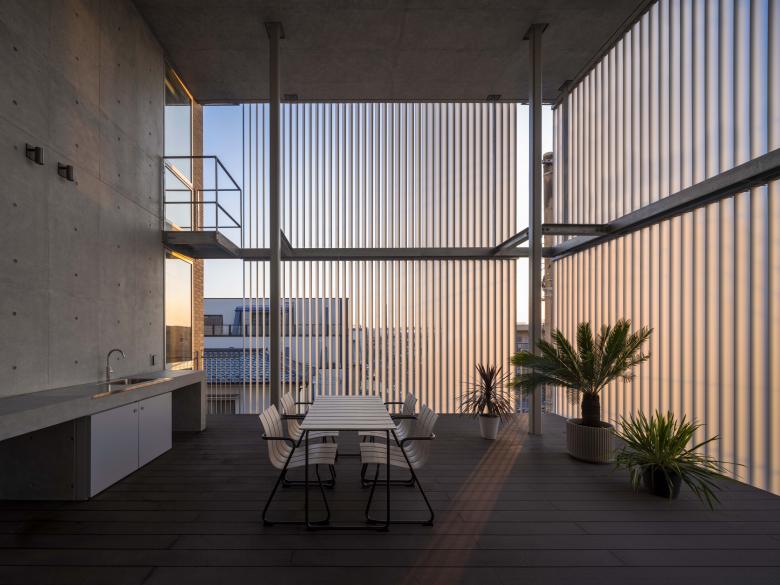
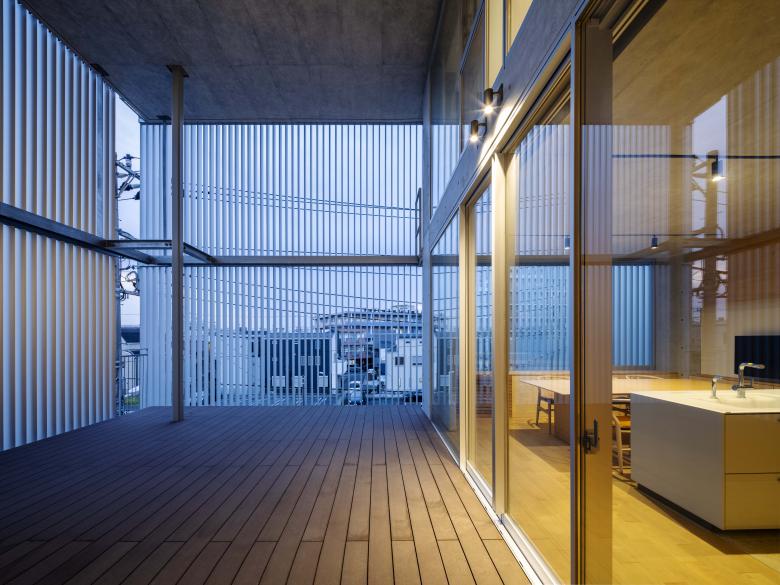
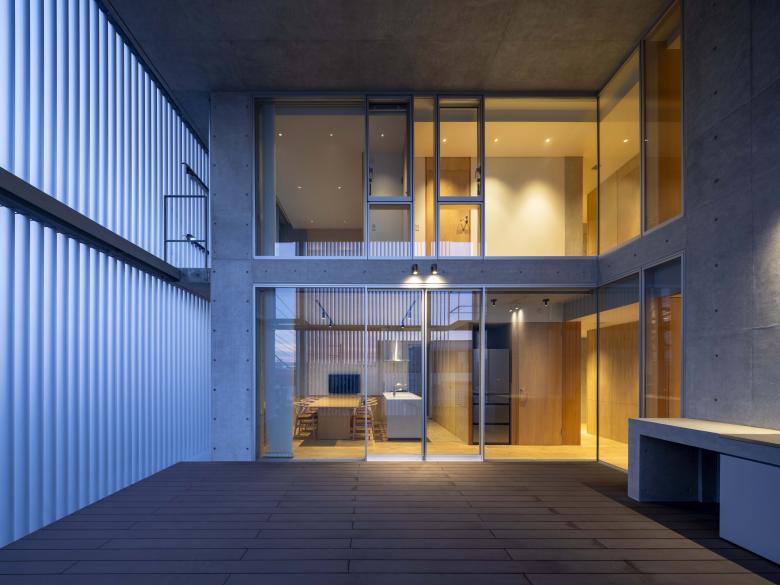
On the third floor and above, the relationship between the internal and external environments was examined with greater care. On the third and fourth floors, the area enclosed by the louvres was divided into two sections, with a terrace created on the south-west side, facing the living spaces.
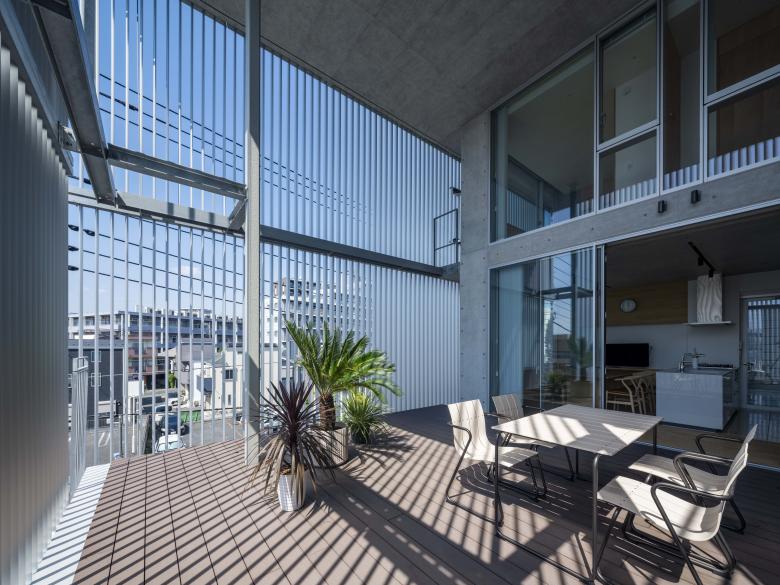
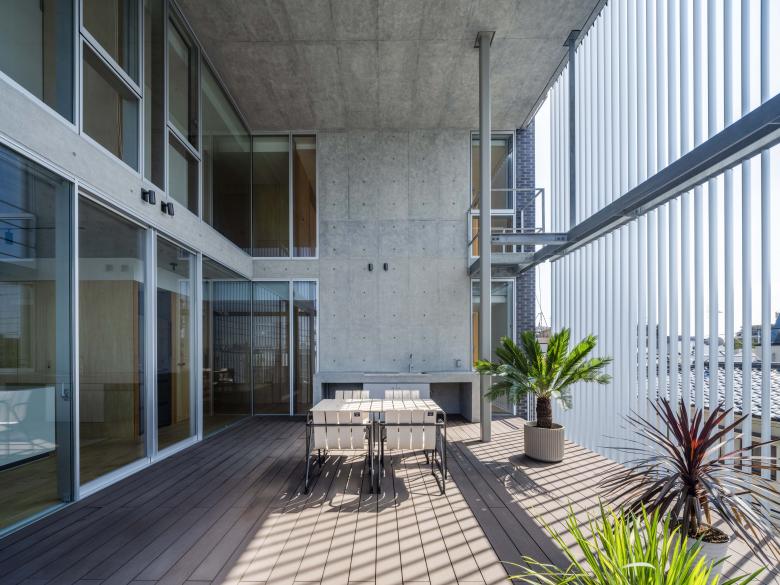
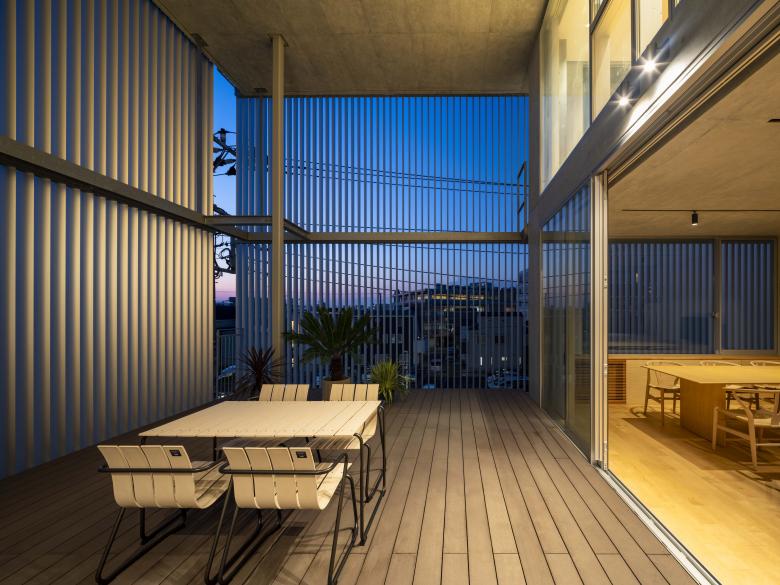
This two-storey-high terrace, equivalent in size to the interior, is enclosed by the louvres. This allows the movement of the sun and changes in weather to be experienced as pure light and wind, without the distraction of the surrounding cluttered landscape.
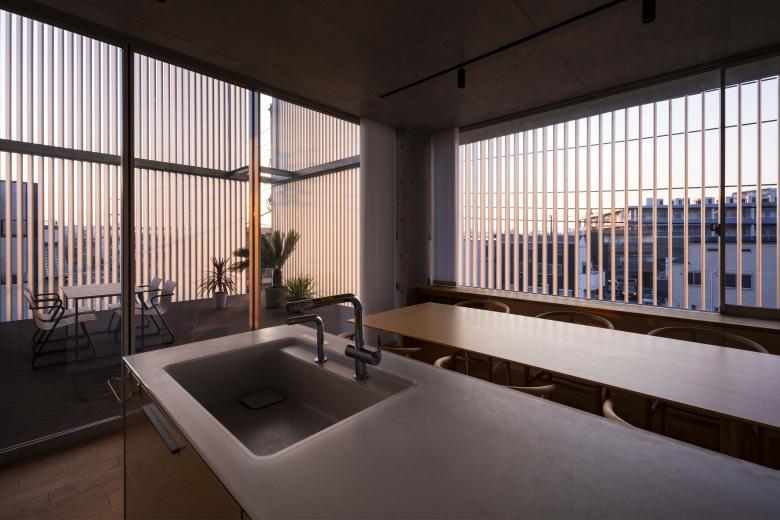
It remains comfortable during the intense heat of midsummer and on rainy days. At dusk, particles of light diffract and reflect off the louvres' surface, softly and beautifully dyeing the entire space a deep crimson.
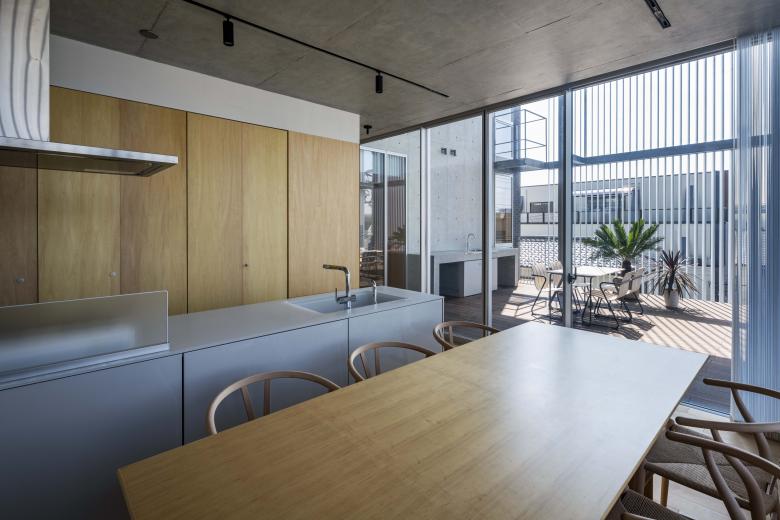
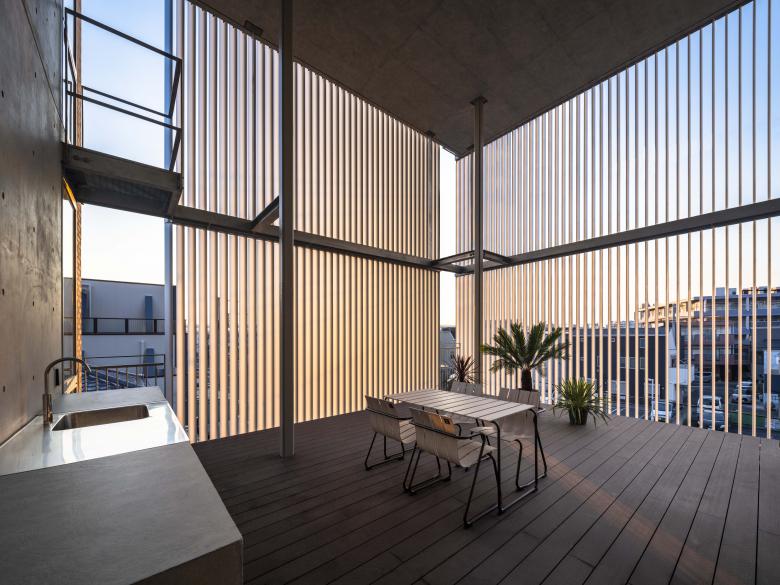
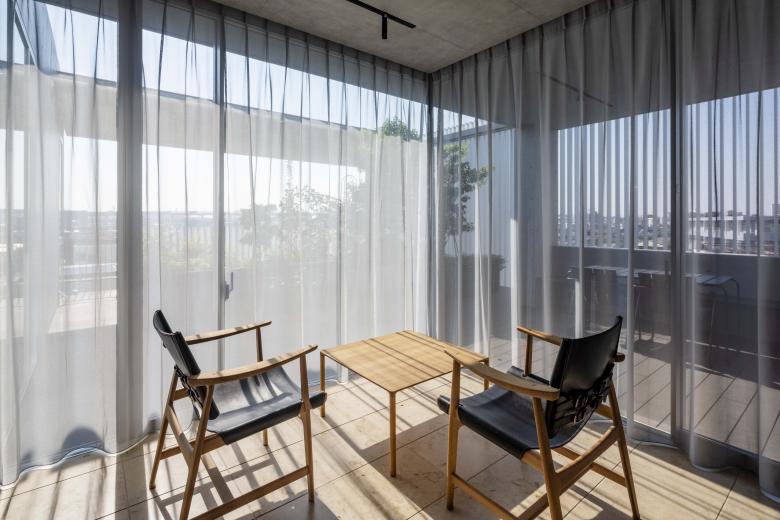
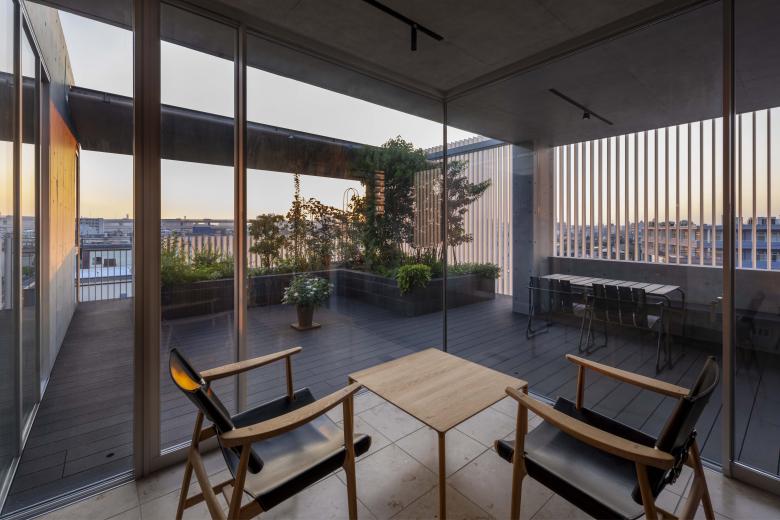
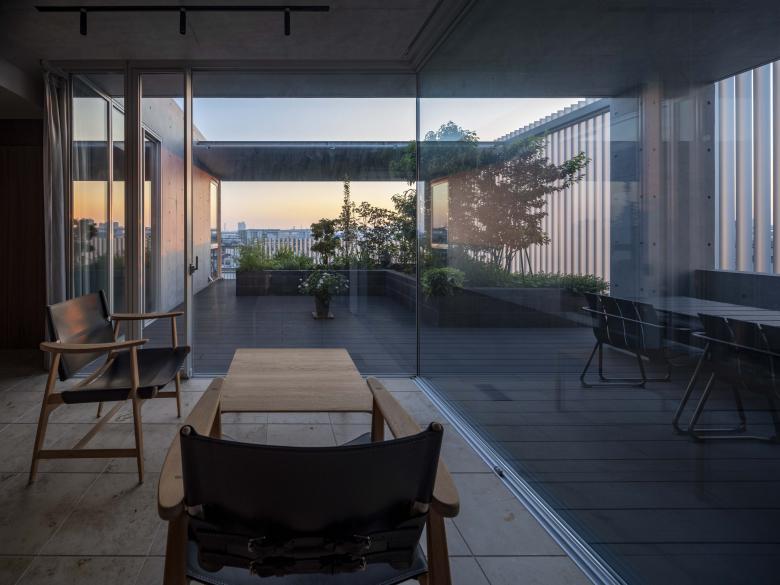
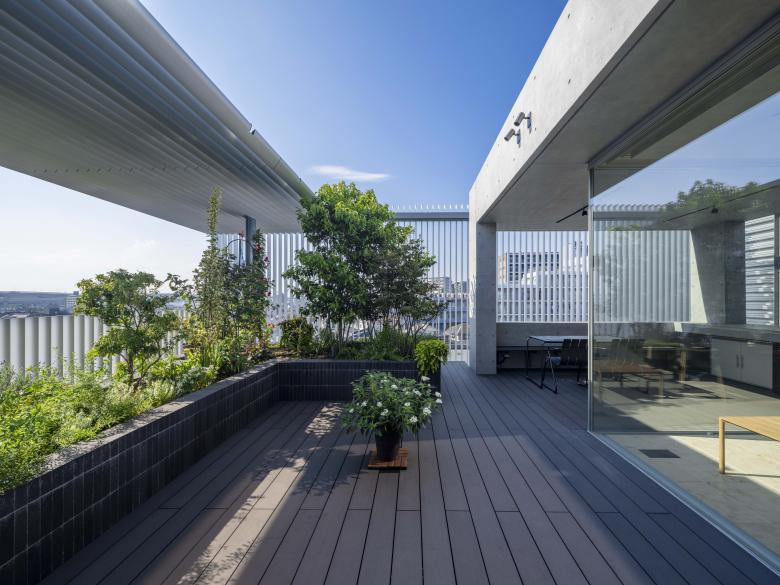
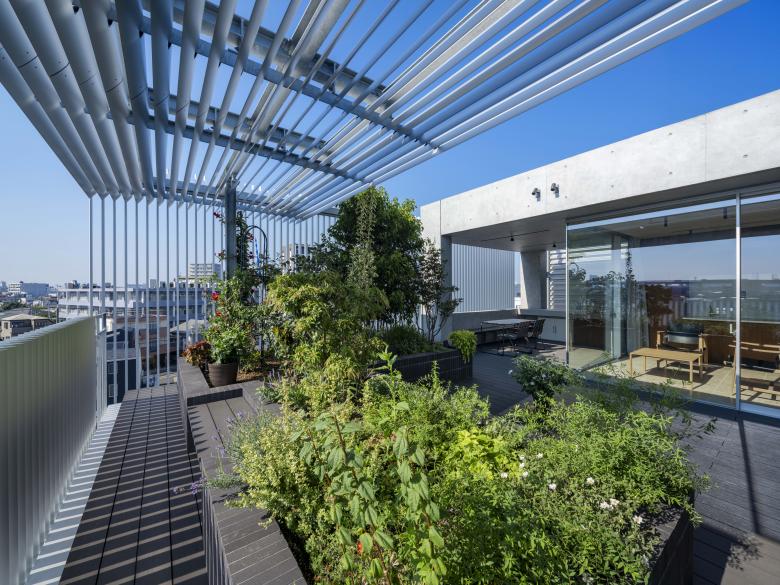
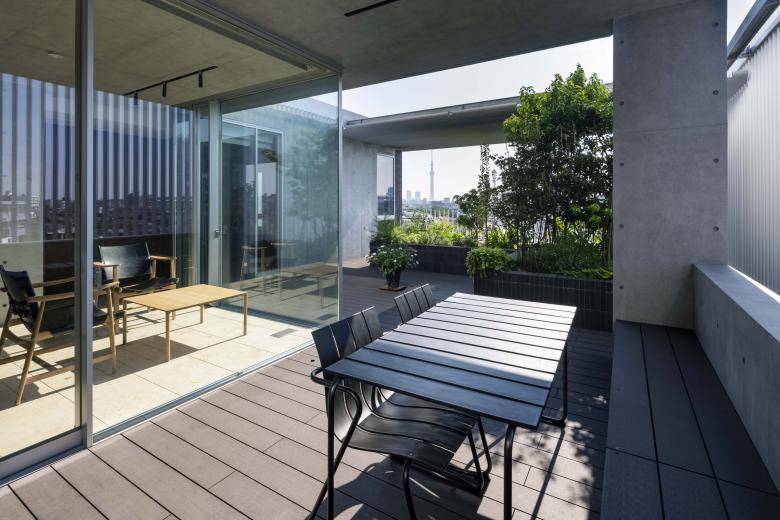
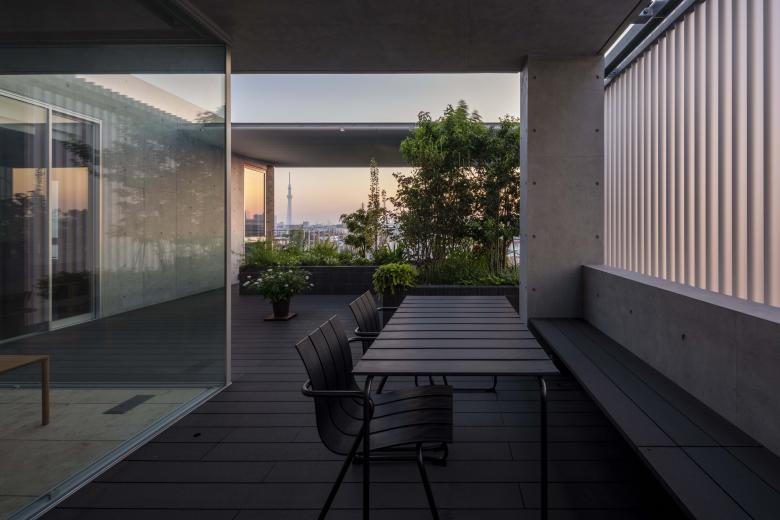
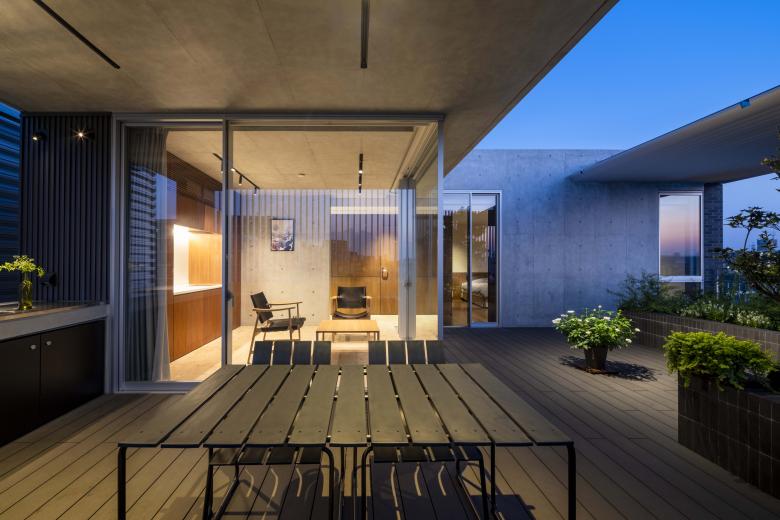
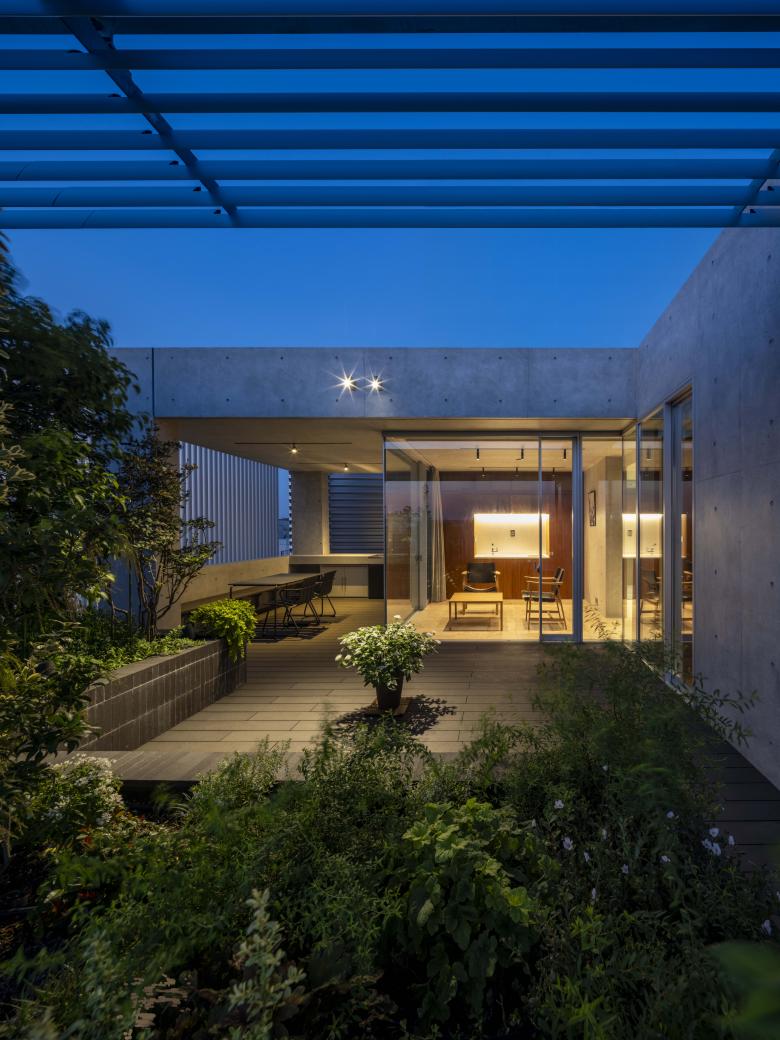
In contrast, the fifth-floor terrace was designed to open onto the external landscape. South-west facing louvres extend to waist height, opening the view while louvres matching the building envelope are installed above the terrace as sunshades, with the space beneath designated for gardening. The terrace extends into a covered dining area adjacent to the lounge, creating an open space for socialising where one can enjoy the sunset while gazing at the Tokyo Skytree and cars passing along the motorway in the distance. Through meticulous consideration of the relationship with the surrounding environment, the transparency of each area is ensured, allowing one to experience a spaciousness that extends beyond the boundaries of the individual spaces.
Beyond the visual beauty of the building, the physical and mental states connect directly with natural phenomena such as light, wind, and changing weather, as well as the landscape. The form of the architecture fades into the background, becoming almost imperceptible, allowing the body, mind, and space to merge. The aim was to create a place where the body and space possess a sense of unity and liberation.
Building Specifications
Principal Use: Office, Detached House
Site Area: 337.58m²
Building Footprint: 122.24m²
Total Floor Area: 486.24m²
Structure & Scale: Reinforced Concrete, 5 storeys above ground
- Year
- 2025
- Project Status
- Built
- Client
- 開発建材株式会社