Long-Distance Bus Terminal
Urban Orientation
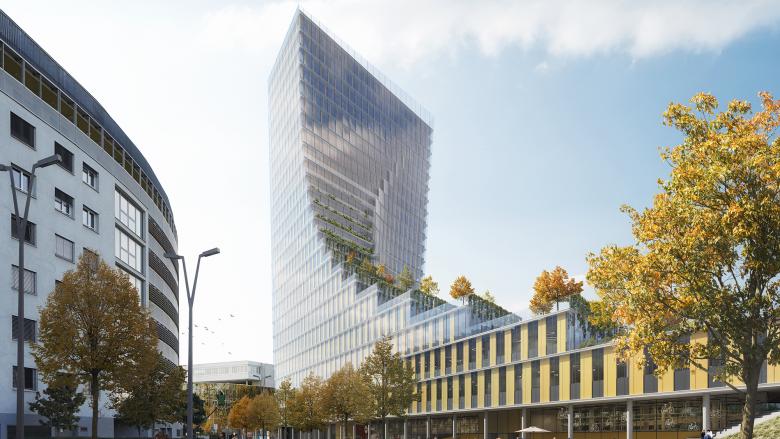
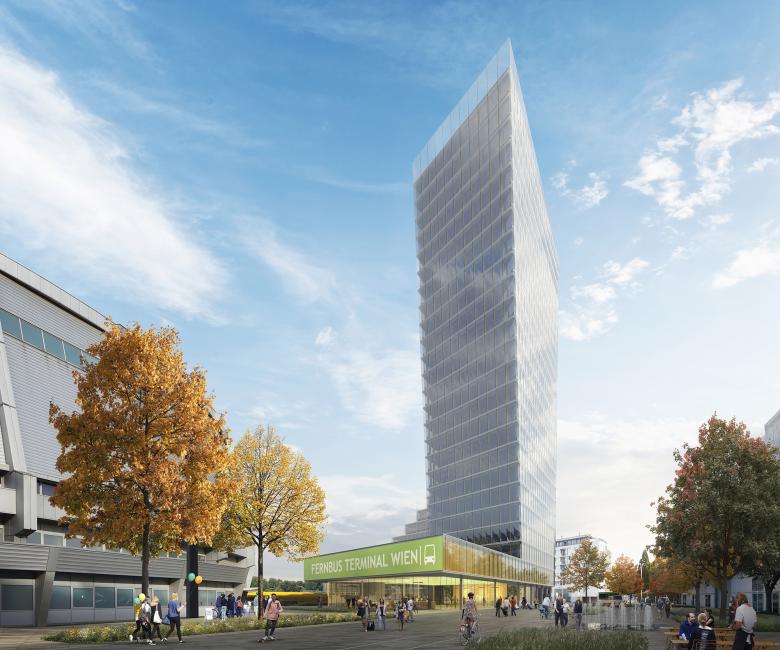
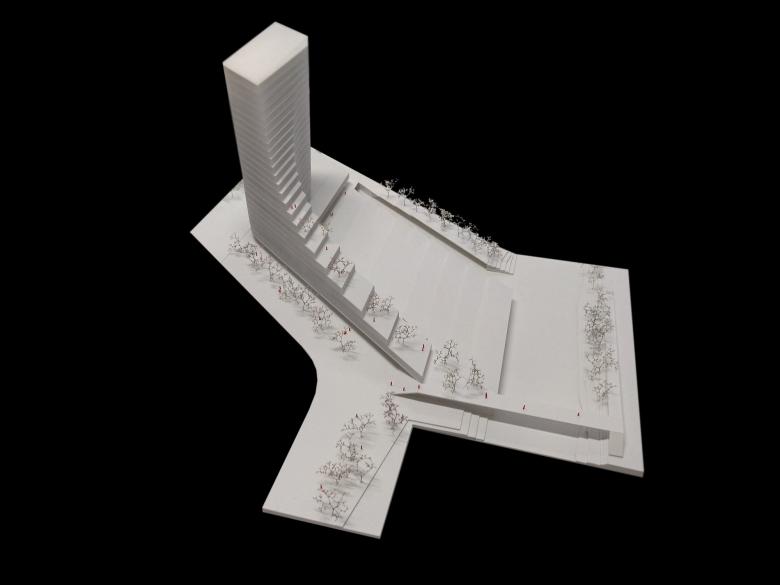
The position of the tower is located at the intersection of two urban directions: the overarching regional axis running parallel to the Danube and Handelskai, and the pronounced shift in the street alignment of Engerthstraße/Marathonweg towards the Danube riverbank. The adaptive geometry of the building is derived from these two directions. In the upper section of the tower, which is visible from afar, the straight alignment is continued, while at the base the building adapts to its immediate surroundings through a curved form.
A Dynamic Sculpture
Located at the transition between urban space and the recreational landscape of the Danube, the tower forms a clear vertical façade towards the city while creating a landscape-like, stepped gesture towards the river. This stepped form allows the building to respond to the surrounding structures: it ensures good daylight access and unobstructed views for the residential buildings along Marathonweg while also responding to the scale of the historic Gasthaus Mehler.
Connecting Urban and Natural Landscapes
An attractive design for the open spaces and (semi-)public outdoor areas is envisioned. The large roof surface of the terminal is landscaped with greenery, as are parts of the building itself. In particular, the generous terrace areas facing the Danube offer high-quality spaces for relaxation and recreation.
The connecting bridge across the Handelskai is conceived as an elegant continuation of the building’s dynamic form and is therefore treated architecturally as an integral part of the structure. The bridge spans without supports between the building and the embankment, ensuring maximum long-term flexibility for both the railway infrastructure and Handelskai.
- Year
- 2021
- Project Status
- Design
- Client
- Stadt Wien
- Competition 2021
- 2nd Round